Free crochet tool
Crochet Hook Size Chart & Converter
A crochet hook’s millimetre size is its real diameter; US letters and old UK numbers are labels for it, so a 4 mm hook is a US G-6 and an old UK 8. Look up common crochet hook sizes in millimeters, US labels and approximate old UK/Canadian sizing. Choose the system on your hook, then a listed size. When labels disagree, use the maker’s millimeter marking and check your pattern’s gauge.
Find a listed hook size
Choose the sizing system printed on your hook or pattern. This tool covers the common regular sizes listed below; it does not guess missing sizes or convert steel thread-hook numbers.
Choose a listed size or try an example to see a reference result and highlight its chart row.
Read the hook size chart
This is a selection of 21 common sizes from 2–19 mm, not every size a maker may sell. US letters can vary by maker. Old UK/Canadian values are approximate historical references, not a Craft Yarn Council UK standard. A dash means the label or range is not listed here.
For Q labels, CYC lists both 15.75 mm and 16 mm. This converter includes the 15.75 mm entry; check the printed metric size if you have a Q hook.
On a narrow screen, scroll across each table to read all columns.
| Metric | US regular label | Old UK / Canadian (approximate) | Reference yarn categories |
|---|---|---|---|
| 2 mm | — | 14 | — |
| 2.25 mm | B-1 | 13 | 1 Super Fine |
| 2.5 mm | — | 12 | 1 Super Fine |
| 2.75 mm | C-2 | — | 1 Super Fine |
| 3 mm | — | 11 | 1 Super Fine |
| 3.25 mm | D-3 | 10 | 1 Super Fine |
| 3.5 mm | E-4 | 9 | 1 Super Fine, 2 Fine |
| 3.75 mm | F-5 | — | 2 Fine |
| 4 mm | G-6 | 8 | 2 Fine |
| 4.5 mm | 7 | 7 | 2 Fine, 3 Light |
| 5 mm | H-8 | 6 | 3 Light |
| 5.5 mm | I-9 | 5 | 3 Light, 4 Medium |
| 6 mm | J-10 | 4 | 4 Medium |
| 6.5 mm | K-10½ | 3 | 4 Medium, 5 Bulky |
| 7 mm | — | 2 | 5 Bulky |
| 8 mm | L-11 | 0 | 5 Bulky |
| 9 mm | M/N-13 | 00 | 5 Bulky, 6 Super Bulky |
| 10 mm | N/P-15 | 000 | 6 Super Bulky |
| 15 mm | P/Q | — | 6 Super Bulky, 7 Jumbo |
| 15.75 mm | Q | — | 7 Jumbo |
| 19 mm | S | — | 7 Jumbo |
Yarn weight reference ranges (1–7)
These are the category 1–7 ranges listed on this page, based on CYC guidance. Ranges may overlap; they do not identify yarn weight from a hook or cover every yarn category. Start with the pattern, yarn label and your swatch.
| Yarn category | Common names | Hook range (mm) | US reference range |
|---|---|---|---|
| 1 Super Fine | Sock, fingering, baby | 2.25–3.5 mm | B-1 to E-4 |
| 2 Fine | Sport, baby | 3.5–4.5 mm | E-4 to 7 |
| 3 Light | DK, light worsted | 4.5–5.5 mm | 7 to I-9 |
| 4 Medium | Worsted, afghan, aran | 5.5–6.5 mm | I-9 to K-10½ |
| 5 Bulky | Chunky, craft, rug | 6.5–9 mm | K-10½ to M/N-13 |
| 6 Super Bulky | Super chunky, roving | 9–15 mm | M/N-13 to P/Q |
| 7 Jumbo | Jumbo, roving | 15 mm and larger | P/Q and larger |
How to use the hook size converter
- Check the system. Find a millimeter value, a regular US letter/number label or an old UK/Canadian number on the hook or pattern. Use the metric value when it is available.
- Choose a listed size. The result shows the corresponding row in this reference chart. Changing the system clears the old selection; Clear selection removes the result.
- Confirm before substituting. Check the maker’s millimeter marking, read the pattern’s gauge and make a swatch with your yarn.
A hook’s millimeter measurement refers to its shaft diameter, where the working loop sits. The letter or number is a label; it is not a universal measurement. The highlighted row helps you read across this chart, rather than guaranteeing that every brand uses the same label.
Why the same US letter can mean different sizes
The Craft Yarn Council lists G-6 at 4 mm and G at 4.25 mm. It also lists I at 5.25 mm and I-9 at 5.5 mm, and Q at both 15.75 mm and 16 mm. A letter alone may therefore leave more than one possible size. This converter is a common-size selection, so some of those entries are not in its list.
If your pattern says G without a metric value, check the manufacturer’s or pattern publisher’s chart. Do not choose a nearby option and treat it as an exact conversion. If the marking has worn off, check the shaft with a suitable hook gauge and confirm the fabric with a swatch.
Old UK/Canadian numbers are historical references
In the old UK system, larger numbers generally indicate smaller hooks. The old UK 8 shown here is approximately 4 mm; US H-8 is 5 mm. Choose the system before reading the number.
The old UK/Canadian column is approximate, and it is separate from the CYC US/metric reference. Published historical charts differ, especially around 2.5–3.75 mm. For a vintage pattern, check the original publisher’s sizing notes and use a swatch to judge the substitution.
Steel thread-hook numbers use a separate system
Steel hooks used with crochet thread have their own numbering, usually with higher numbers for smaller hooks. Their millimeter sizes overlap some regular hooks, so a size of 2 mm or above does not tell you which system you have. Do not enter a steel thread-hook number in this regular-hook converter. Check the maker’s metric label or the CYC steel-hook reference.
Use yarn ranges as a starting point, then swatch
The second table shows the category 1–7 ranges listed on this page. CYC describes these as guidelines, and adjacent ranges overlap. A hook size alone cannot identify yarn weight or tell you the only hook that will work. Read the yarn label; use the yarn weight chart if you need help comparing the categories and names it currently lists.
Make a swatch in the pattern’s stitch, measure it as the pattern directs and compare the same area. More stitches per 10 cm than required usually means trying a larger hook; fewer usually means trying a smaller hook. Swatch again after a change. The crochet gauge calculator compares those measurements, and the gauge, hook and yarn guide explains the process.
For amigurumi, judge the fabric as well as any stated gauge. Follow the specific pattern rather than reducing every yarn’s recommended hook by a fixed amount. If stuffing shows through, the guide to fixing amigurumi gaps helps you check hook size, tension and other causes.
Keep a paper reference beside your project
Open the free printable crochet hook size chart (PDF) when you want a paper reference. The online selector gives an interactive result; the PDF is a separate printable file. Check the brand and historical-sizing notes above before substituting hooks.
If you are choosing your first tools, read the amigurumi supplies guide. If you prefer a project with materials, browse DIY crochet kits and check each selected option’s listed contents and instructions before ordering.
Chart sources and scope
- US/metric reference: Craft Yarn Council — Hooks & Needles. This page uses a selection of common sizes, and letters can vary between makers.
- Yarn reference ranges: Craft Yarn Council — Standard Yarn Weight System. This page shows its listed categories 1–7 as guidance, not a complete current yarn-category standard.
- Separate thread-hook numbering: Craft Yarn Council — Steel Crochet Hook & Crochet Thread Sizes.
- Approximate historical UK/Canadian references were compared with published charts from GANXXET and Handy Little Me. Their smaller-size mappings differ; this column is not an official CYC UK table.
Ready to make a project?
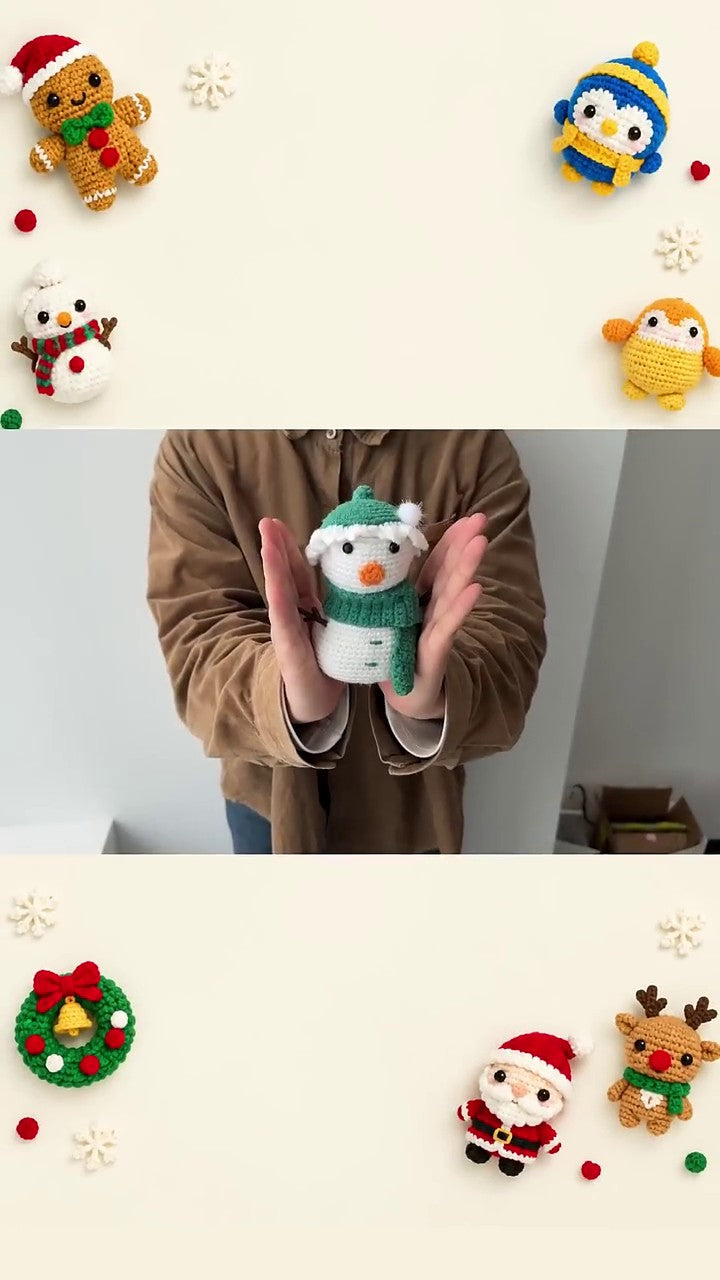
Try the tool on a small project. Each one is a DIY kit with all materials, the crochet hook and an English video tutorial.
Frequently asked questions
What size is a US G-6 crochet hook in mm?
The Craft Yarn Council chart lists US G-6 at 4 mm. It also lists G at 4.25 mm, which is not an option in this converter. If your pattern says only G, check the maker’s or publisher’s millimeter size instead of assuming it means 4 mm.
Is a US H-8 hook the same as an old UK 8?
No. The CYC chart lists US H-8 at 5 mm. The historical old UK reference shown here places UK 8 at approximately 4 mm. A bare number 8 is not enough to identify the size; steel thread-hook numbers use another system too.
Are old UK and Canadian conversions exact?
Treat this column as an approximate historical reference. Published charts and makers differ, particularly around 2.5–3.75 mm. Check the original pattern publisher’s sizing notes, the hook’s printed millimeter size and a swatch. It is not a CYC official UK conversion table.
What if my size is not in the list?
This converter includes the common sizes shown in its table, not every size or brand label. Do not round a missing size to the nearest option. Look for the maker’s metric label or the pattern publisher’s chart. A dash means not listed in this reference, rather than that no such label exists.
Does this converter include steel thread-hook numbers?
No. Steel hooks used with crochet thread have a separate numbering system, and their millimeter sizes overlap some regular hooks. Size or material alone does not identify the system. Check the maker’s metric marking or the CYC steel-hook chart; do not enter a steel-hook number as a regular US or old UK number.
Can hook size tell me my yarn weight?
No. The yarn categories beside a result only match the reference ranges listed on this page. Several categories can share a hook size, and a pattern may call for a hook outside its yarn label’s range. Check the label and make a swatch; no match does not identify the yarn as thread or a particular category.
Which hook should I use for amigurumi?
Start with the specific pattern’s recommendation and check the fabric with your yarn and tension. Some amigurumi patterns use a smaller hook to make a firm fabric that holds stuffing, but there is no single size reduction for every yarn. Check for gaps and confirm any stated gauge before substituting hooks.
Last updated November 21, 2026 · Sources: Craft Yarn Council Standards & Guidelines (craftyarncouncil.com) for weight categories and hook ranges; notes by the Forfunly crochet team.
More free crochet tools and printables
- Photo to Crochet Pattern Generator — Turn a photo into a colour grid chart for tapestry, C2C or graph crochet. Choose the grid size and number of colours, then download the chart.
- Crochet Row Counter — Count rows or rounds and stitches with big buttons, get a reminder at each pattern repeat and keep separate counters for every project, saved in your browser.
- Filet Crochet Pattern Generator — Type a name or word and get a filet crochet chart of blocks and spaces, with row-by-row instructions and the foundation chain count. Download as PNG or text.
- Crochet Increase & Decrease Calculator — Spread increases or decreases evenly across a round or row, and plan a flat circle or a sphere round by round with exact stitch counts.
- Crochet Gauge Calculator — Compare your swatch with the pattern gauge, see which direction to change the hook and estimate stitches for a width.
- Yarn Weight Chart and Finder — Compare yarn categories 0–7, regional names and reference hook ranges. Use label details, wraps per inch or US single crochet gauge as clues, then check a swatch.
- Yarn Calculator: How Much Yarn Do I Need? — Estimate yarn for a project from your own swatch: weigh or measure the yarn in a sample, enter the project size and get skeins with a safety margin.
- Free printable crochet charts and checklists — abbreviations, hook sizes, yarn weights, symbols, increase charts, trackers and gift tags as PDFs.
- Crochet guides and learning paths — step-by-step lessons from the first chain to finishing an amigurumi.