Forfunly crochet guides
How to Do an Invisible Decrease in Crochet
An invisible decrease (inv dec) turns two single crochet stitches into one, just like a standard sc2tog, but it hides better on amigurumi. You only work through the front loops, so the decrease sits flatter and leaves a smaller gap. This guide covers the steps for both hands, how it differs from sc2tog, and how to keep your stitch count right.
Illustrations updated
What should you check first?
To do an invisible decrease, insert the hook under the front loop of the next stitch, then under the front loop of the stitch after it. You now have three loops on the hook. Yarn over and pull through the two front loops, then yarn over and pull through the two loops left on the hook. Two stitches become one.
What an invisible decrease is
An invisible decrease is a single crochet decrease worked through the front loops only of two neighbouring stitches. It removes one stitch, the same as sc2tog, so the stitch count in your pattern does not change.
The front loop is the top loop nearest you as you work. Because the back loops are left alone, the decrease does not pull a gap open the way a standard sc2tog can. That is why many amigurumi patterns write "dec" and mean the invisible version.
If your pattern says "sc2tog", it may want the standard decrease on purpose. If it says "inv dec" or "invdec", use the method on this page. When a pattern only says "dec", check its abbreviation list.
How to do an invisible decrease (right-handed)
Work with the right side of the piece facing you, as you would for standard amigurumi in the round.
- Find the next two stitches. Look for the front loop of each one: the top loop closest to you.
- Insert the hook under the front loop only of the first stitch, from front to back.
- Without yarning over, insert the hook under the front loop only of the second stitch. You now have three loops on the hook.
- Yarn over and pull through the two front loops. Two loops stay on the hook.
- Yarn over again and pull through both loops on the hook. One decrease is done.
- Count it as one stitch, then work the next stitch into the next unworked stitch.
Pull the yarn through the two front loops in one movement. If you pull through them one at a time, you have made a different stitch and the decrease will look bulkier.
Left-handed invisible decrease
Hold the hook in your left hand and the yarn in your right. The steps are the same: front loop of the first stitch, front loop of the second stitch, yarn over and pull through both front loops, then yarn over and pull through the last two loops.
You work from left to right, so the "next" stitch is the one to the right of your hook. The front loop is still the loop nearest you.
Invisible decrease vs standard sc2tog
Both decreases turn two stitches into one. The difference is which loops you work and how much the decrease shows on the right side.
The photos below show the standard sc2tog from our kit booklet, so you can see where it differs: the hook goes through both loops of each stitch and pulls up a full loop from each one.
| Invisible decrease (inv dec) | Standard decrease (sc2tog) | |
|---|---|---|
| Loops you work | Front loop only of 2 stitches | Both loops of 2 stitches |
| Loops on the hook before closing | 3, then 2 | 3 |
| Stitches removed | 1 | 1 |
| How it looks on amigurumi | Flat, close to an ordinary single crochet | A small bump, sometimes a gap |
| Best for | Right-side-out amigurumi in the round | Flat pieces, rows, or where a pattern asks for it |

Keep the stitch count right
Each invisible decrease uses two stitches from the round below and makes one. So a round of (sc, inv dec) six times uses 18 stitches and makes 12.
Put a stitch marker in the first stitch of each round and count at the end. If you are one stitch over, you probably skipped a decrease; if you are one under, a decrease may have used three stitches instead of two.
- Two front loops, no more
- Count each decrease as one stitch
- Marker in the first stitch of the round
- Total checked against the pattern
Common invisible decrease problems
A hole still shows: the yarn was loose when you closed the stitch, or the hook is large for the yarn. Snug the final pull-through and try a smaller hook on a sample.
The decrease looks like a ridge: you worked through the back loops instead of the front loops. On the right side, the front loop is the one nearest you.
The piece closes too fast or too slowly: the count is off. Count the round and compare it with the pattern before you go on.
It is hard to get the hook under two loops: relax your grip and use the shaft of the hook, not the tip, to open the loops.
Practice on a small project
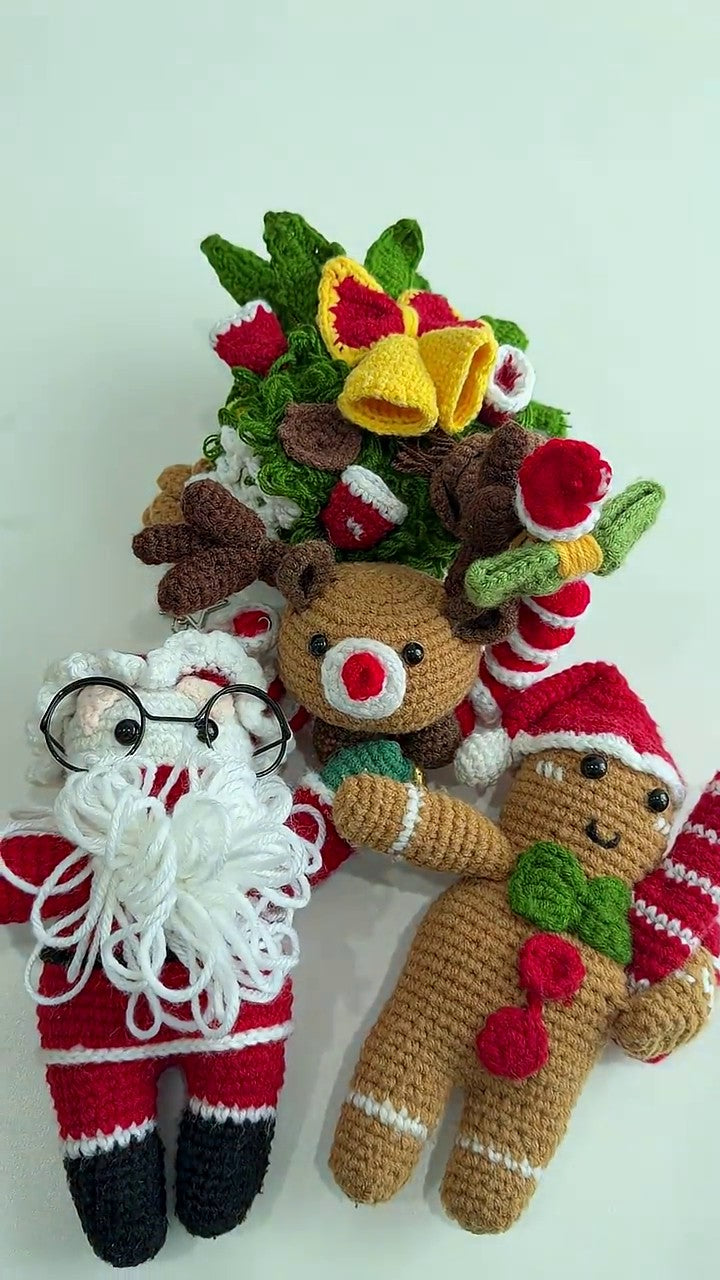
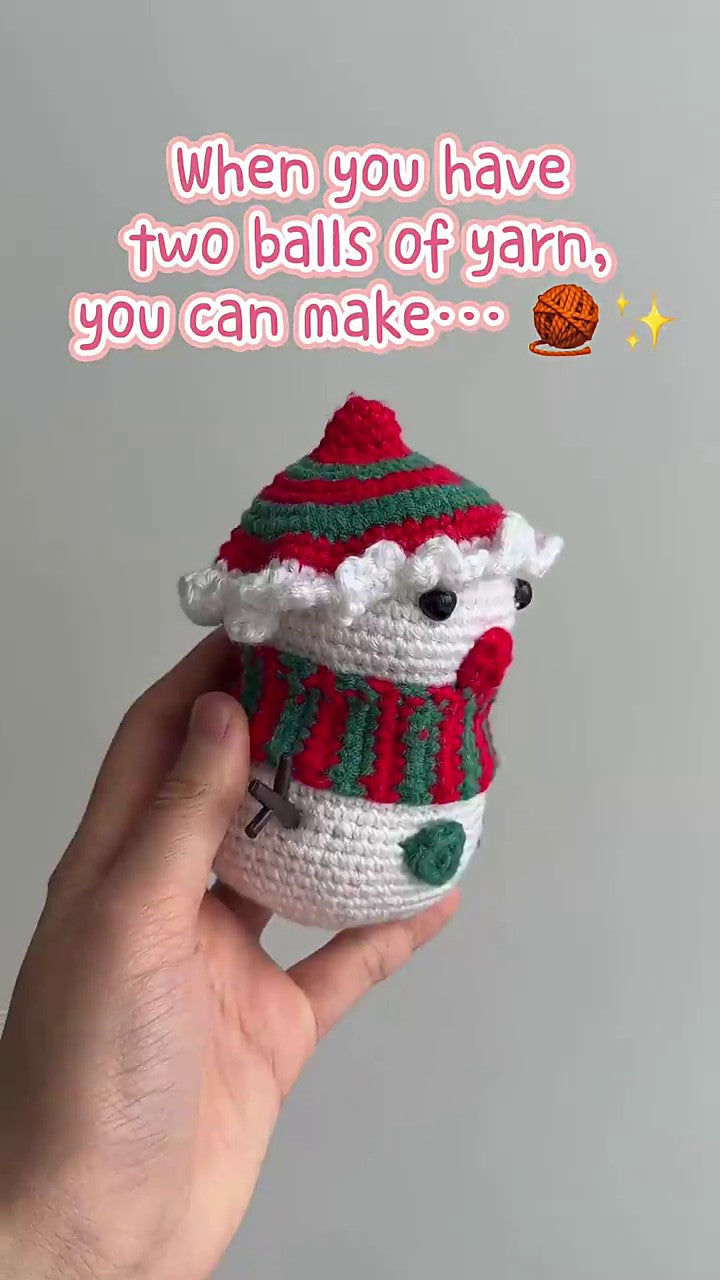
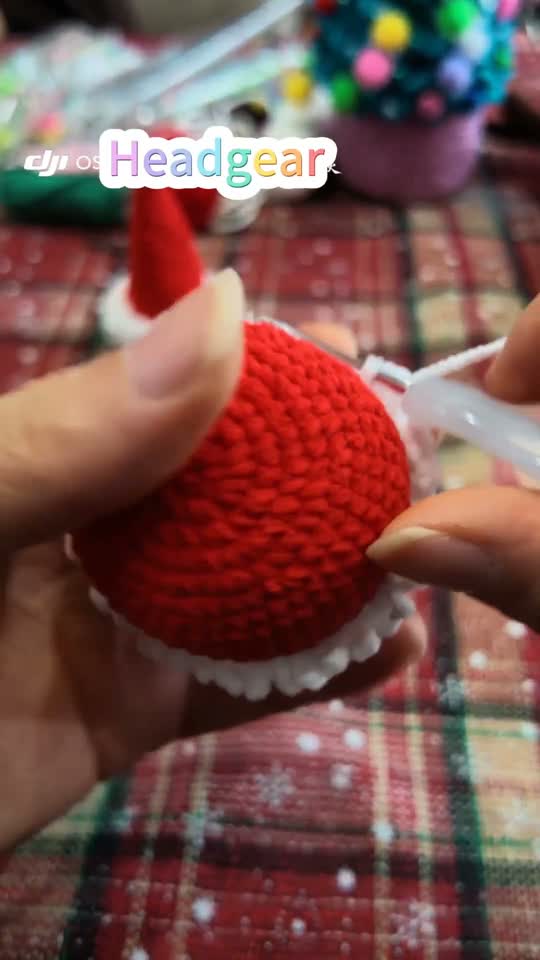
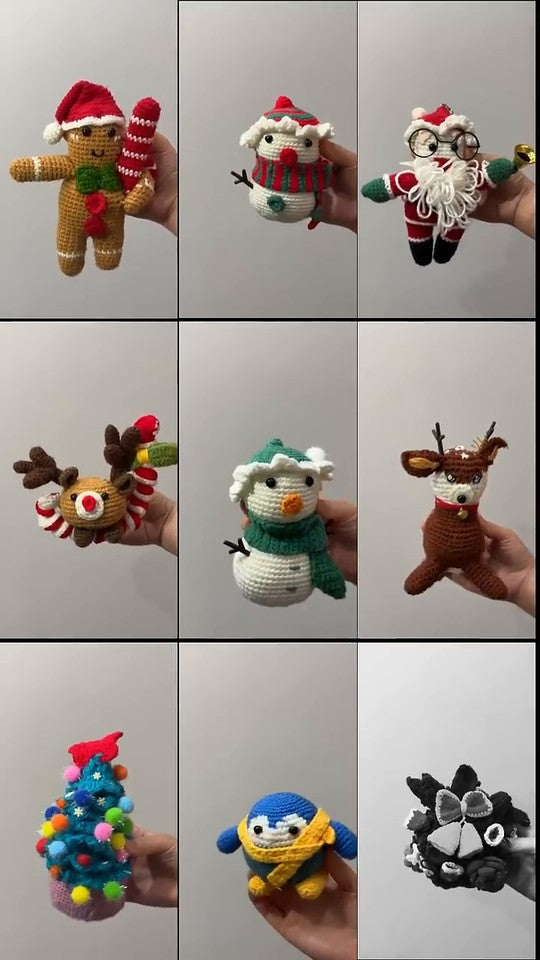
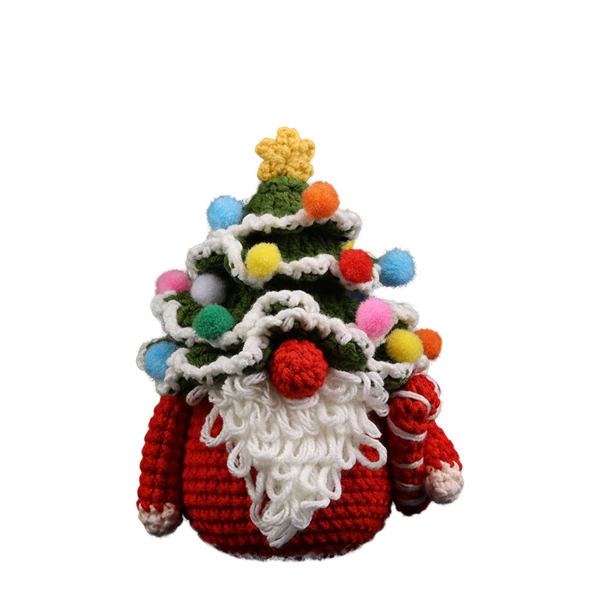
Small round shapes are a good place to practice, because the last rounds of a head or ball are mostly decreases. The Round Reindeer Face, Santa Face and Christmas Tree Hat kits are stuffed pieces worked with a 1.8 mm hook, and each comes with chenille-style yarn, stuffing, eyes, a yarn needle, stitch markers and an English video tutorial.
Frequently asked questions
What is an invisible decrease in crochet?
A single crochet decrease worked through the front loops only of two stitches. It removes one stitch, like sc2tog, but sits flatter on amigurumi.
Is an invisible decrease the same as sc2tog?
Both turn two stitches into one, but sc2tog works through both loops of each stitch. The invisible decrease works through the front loops only, so it shows less on the right side.
Does an invisible decrease count as one stitch?
Yes. It uses two stitches from the round below and makes one new stitch.
Can left-handed crocheters do an invisible decrease?
Yes. Swap hands and work from left to right. You still go under the two front loops, the loops nearest you. Left-handed crochet tips →
Should I always use the invisible decrease?
Use it for right-side-out amigurumi in the round when your pattern allows it. If a pattern asks for sc2tog or another decrease, follow the pattern.
Find your next crochet design
Choose a project to make. Check the selected option before ordering.
- Single Crochet Increase and Decrease: Make the Stitches, Check the Count
- Learn with a US single crochet practice square
- Ask about a product’s contents or instructions
Before ordering, read the current shipping and returns information.
Further learning
For stitch names, see the Craft Yarn Council crochet abbreviations. For difficulty, see its project skill levels. Follow the pattern for your project. Check the product page for what you will receive.
Explore all crochet guides →