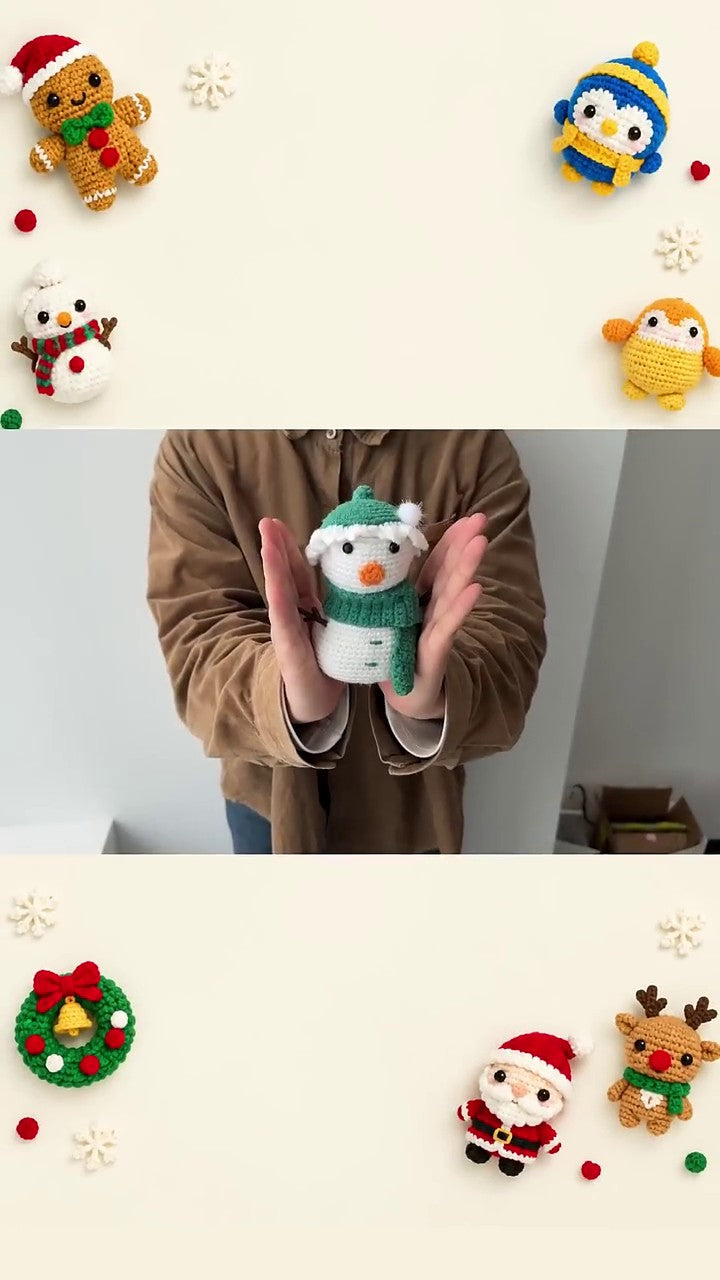
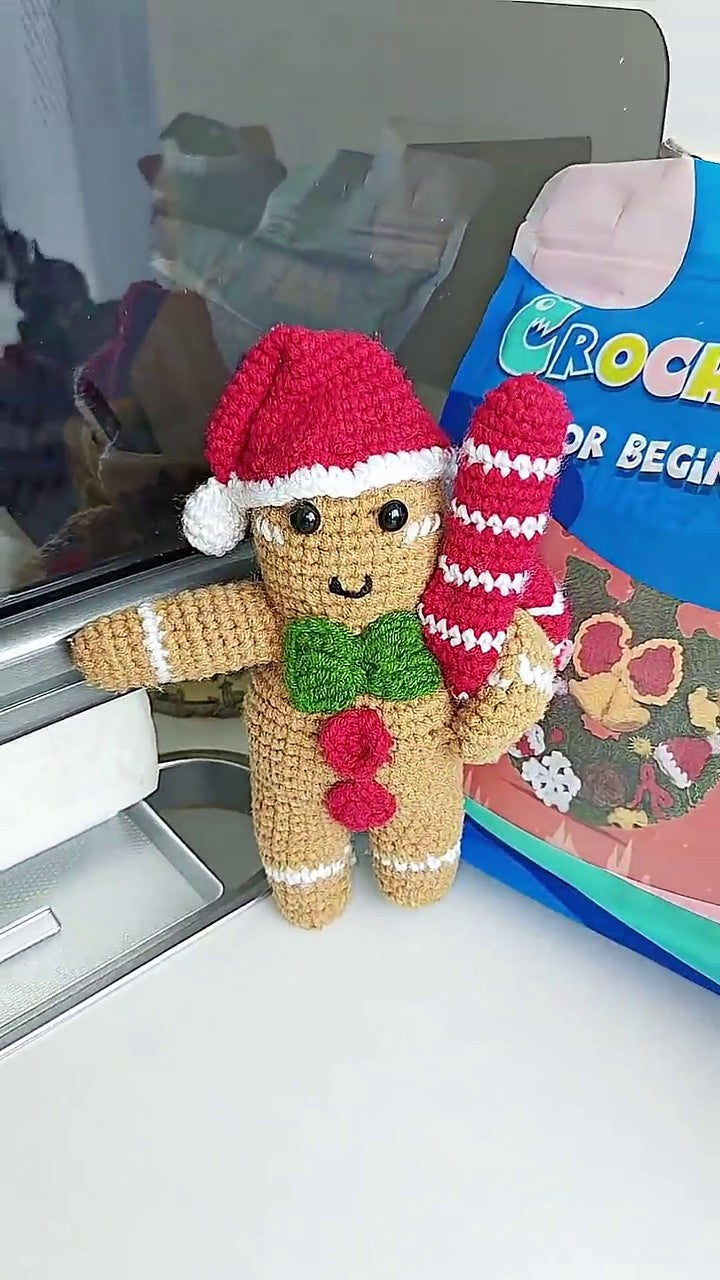
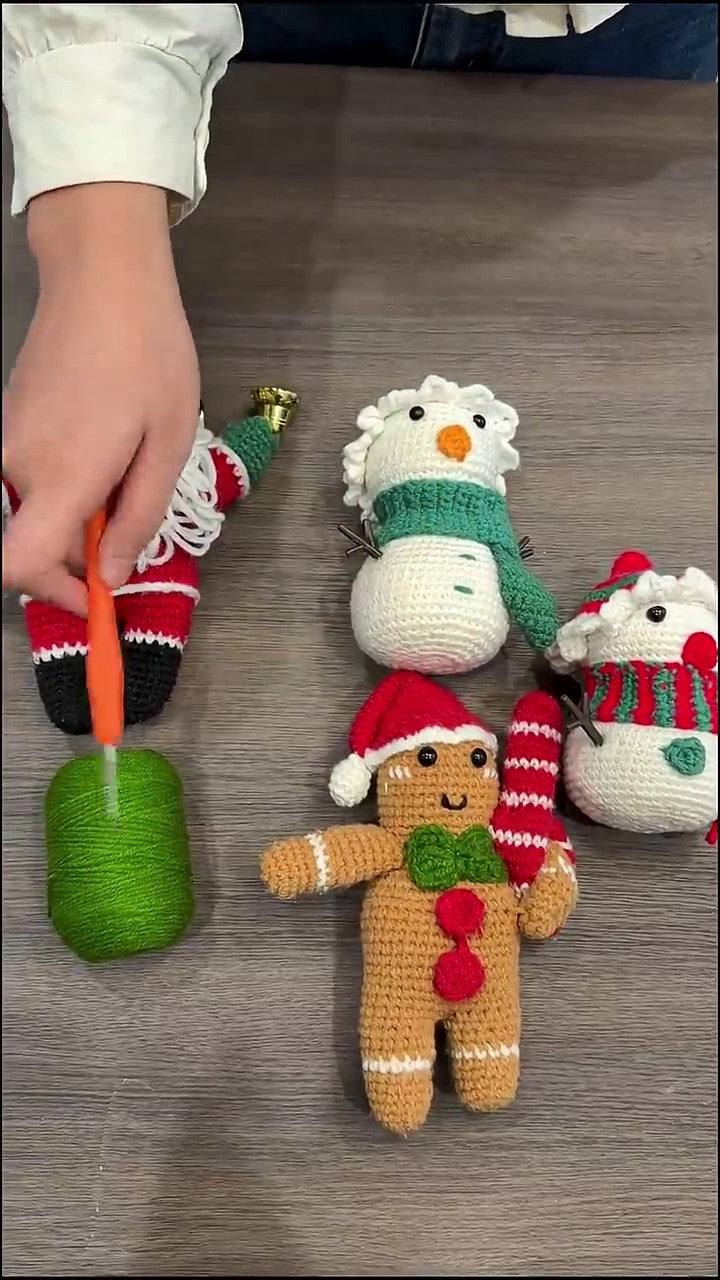
Forfunly crochet guides
US Crochet Abbreviations: Read Your First Pattern
A crochet pattern is a set of instructions written in shorthand. Learn the few abbreviations your project uses, then read one row or round at a time. This lesson uses US terminology throughout; check the terminology and special-stitch notes in your own pattern first.
Illustrations updated
What should you check first?
In US terms, ch means chain, sc means single crochet, st means stitch and sl st means slip stitch. An increase makes more stitches, while a decrease makes fewer. The pattern’s key defines how to work them, and the number at the end usually tells you the completed stitch count.
Identify the terminology before using the hook
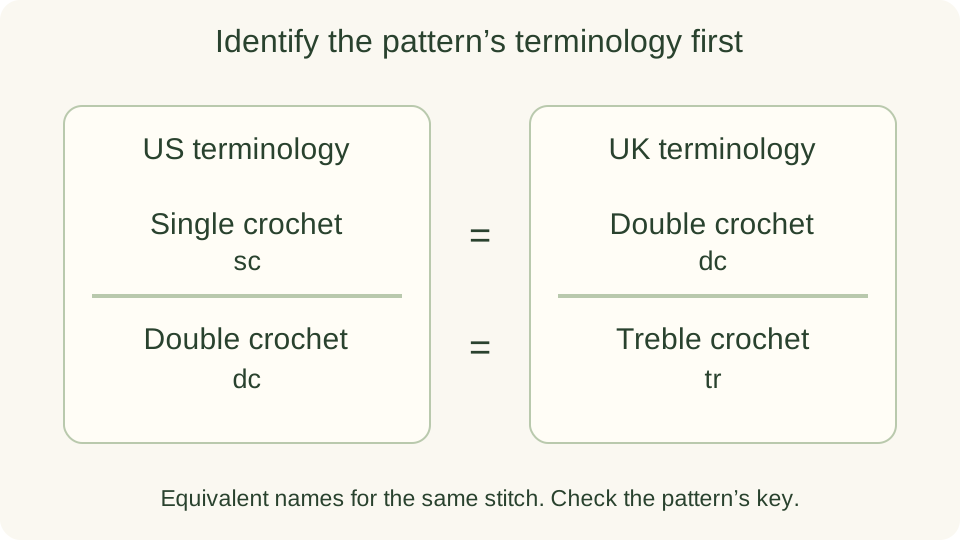
US and UK names are different. US single crochet is UK double crochet; US double crochet is UK treble crochet. Following a UK instruction as though it were US changes the height of your stitches. A storefront’s language does not establish which system a supplied pattern uses.
Read the abbreviation key, hook recommendation and notes about turning or joining. Mark any unfamiliar instruction before starting. MR often means magic ring, but it is not a universal instruction: use the starting method the pattern actually explains.
Build a small working key
Start with the terms that appear repeatedly. “Rep” means repeat, “rnd” means round, and “yo” means yarn over. FLO and BLO refer to the front loop only and back loop only, rather than both loops at the top of a stitch.
For an instruction written as “sc2tog,” two single crochet stitches are worked together to produce one stitch. An “inc” often means two sc into the same stitch in an amigurumi pattern, but other stitch types can increase too. Always use the pattern’s definition.
- ch: chain; sc: US single crochet
- st / sts: stitch / stitches; sl st: slip stitch
- inc: increase; dec: decrease, using the specified method
- rnd: round; rep: repeat; yo: yarn over
Work through a repeat with actual counts
Suppose the previous round has 12 stitches. The instruction “(sc, inc) × 6 [18]” means work one sc into the next stitch, then two sc into the following stitch. That small repeat uses two existing stitches and produces three new stitches.
Do the repeat six times. You use 12 stitches and finish with 18. The final “[18]” is a check, not another instruction to crochet 18 more stitches. Brackets, parentheses and asterisks can have different roles across patterns, so read the notation notes.
Pause at the end of each row or round
Move a removable marker to the first stitch of a new continuous round. For rows, check whether the turning chain counts as a stitch; that choice affects where the last stitch belongs. Do not assume every pattern uses the same rule.
If your total is wrong, compare stitches used with stitches made. Missing the second stitch of an increase leaves you short. Working twice into an unintended stitch adds one. Undo only as far as the mistake requires, then repeat and count again.
Apply the key to a project you can follow
Choose a project with an accessible abbreviation key and clear assembly instructions. Check the language and instruction format of a specific kit before ordering. These free explanations are general lessons; they do not establish which pattern or tools a product includes.
Find your next crochet design
Choose a project to make or a finished piece to buy. Check the selected option before ordering.
- How to Start Amigurumi: A Beginner Crochet Guide
- Learn with a US single crochet practice square
- Ask about a product’s contents or instructions
Before ordering, read the current shipping and returns information.
Further learning
For stitch names, see the Craft Yarn Council crochet abbreviations. For difficulty, see its project skill levels. Follow the pattern for your project. Check the product page for what you will receive.
Explore all crochet guides →