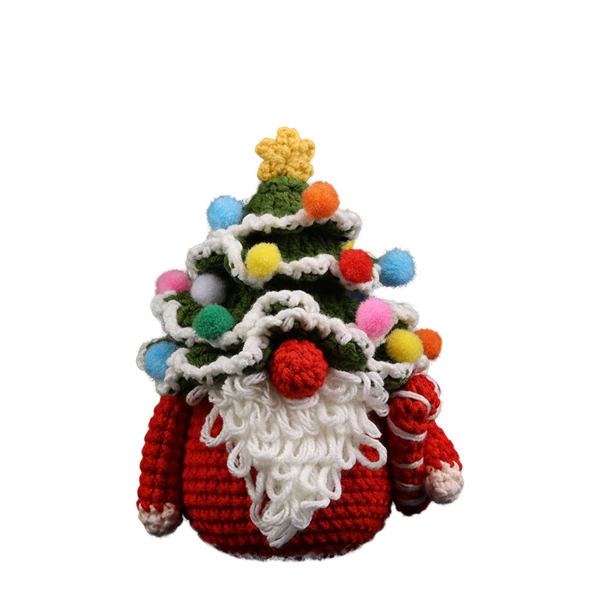
Your First Christmas Crochet Project: How to Choose and Prepare
A beginner’s guide to choosing a character, practising the basics and making a holiday keepsake.
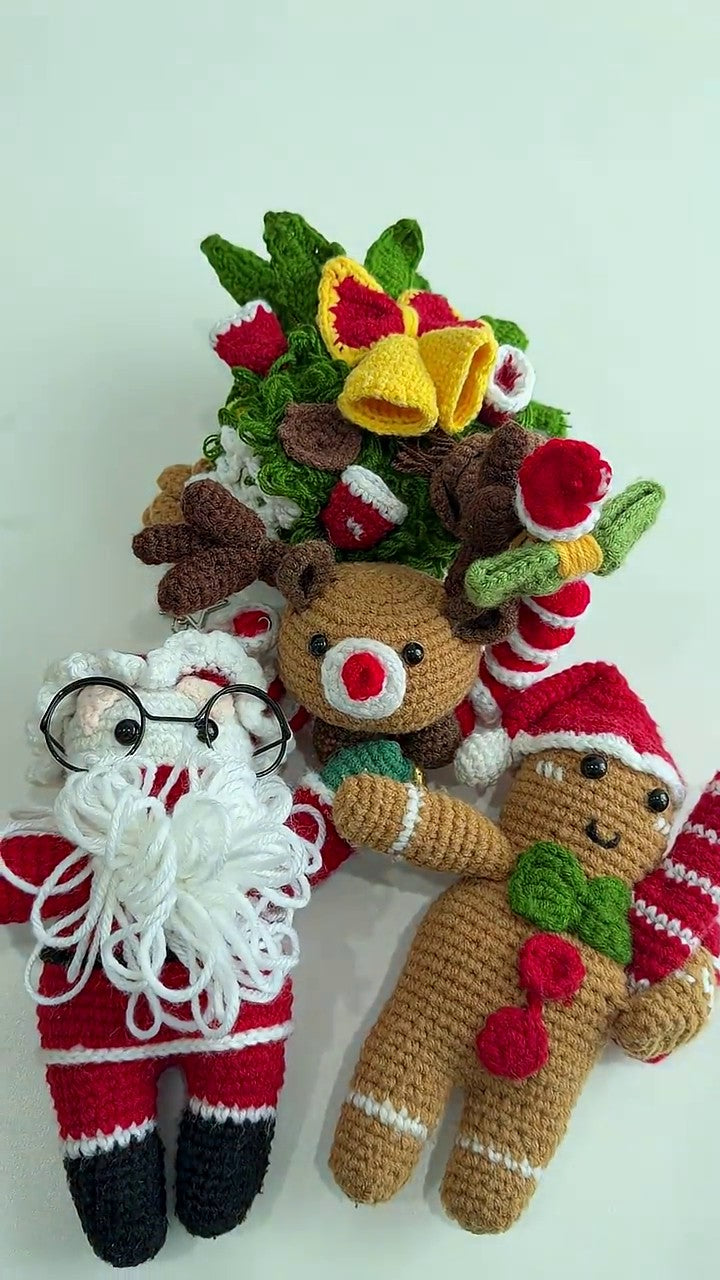
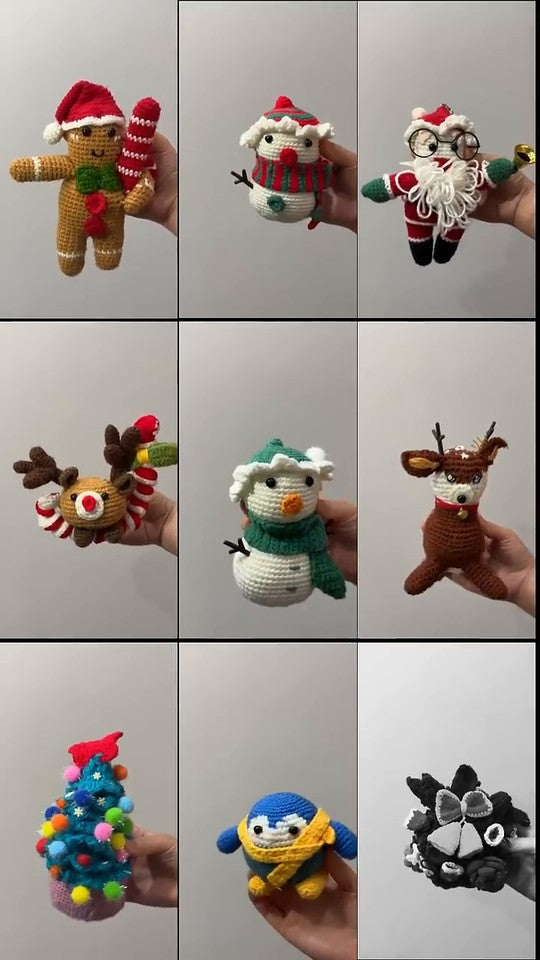
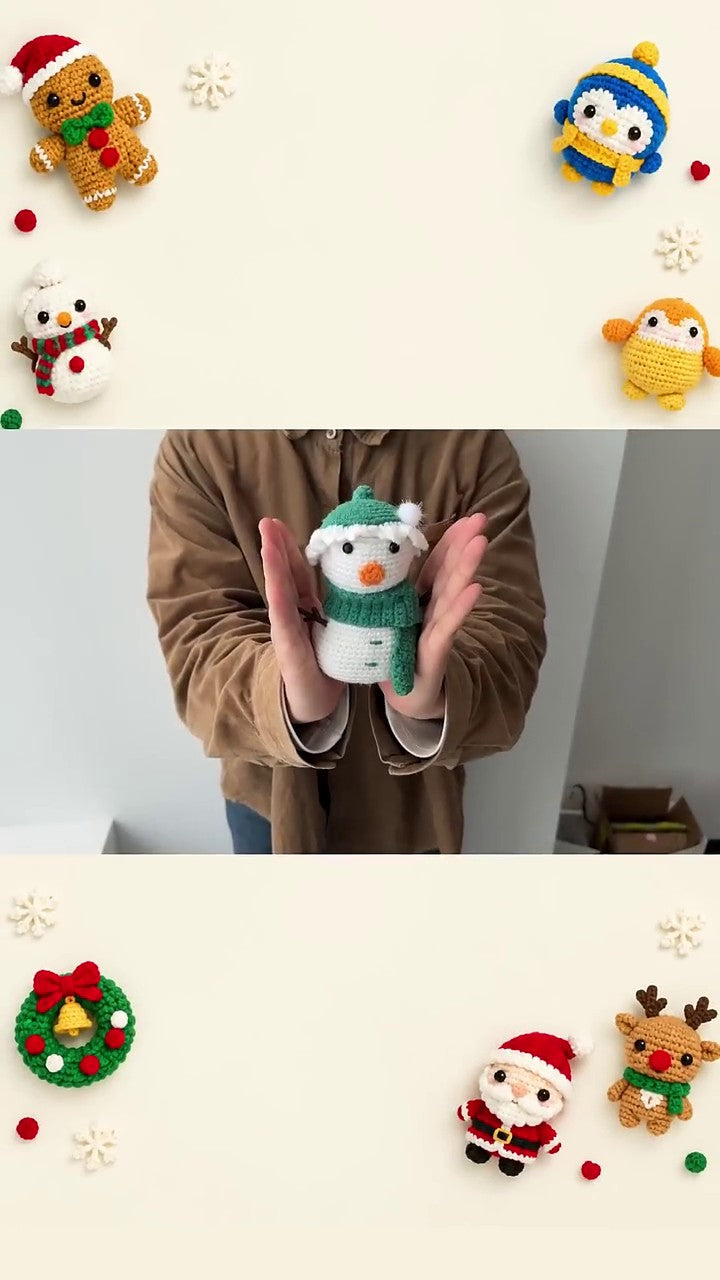
A tiny Santa with a white beard. A snowman in a cheerful scarf. A gingerbread friend waiting beside the Christmas cards. Making one yourself can be a lovely way to begin a holiday tradition—even if crocheting a toy is new to you.
Want to see every design first? Browse our Christmas crochet kits, then use this guide to choose the one you will make first.
The best first Christmas crochet kit is a project with instructions you can follow, techniques you are ready to practise and a character you want to finish. Start with one design, understand what it involves and give yourself time to learn.

Who this guide is for
This guide is for adults choosing their first festive crochet project: complete beginners who need help getting started, makers moving from flat practice pieces to their first toy, and anyone hoping to make a personal Christmas gift.
If you have never crocheted, look for instruction support that starts with holding the hook, making stitches and reading the pattern. If you already know single crochet, focus on the next steps: working in rounds, shaping and attaching parts. The same kit will not suit every starting point.
What a Christmas crochet kit actually is
A crochet kit is intended to help you make a particular design. Amigurumi kits focus on three-dimensional crochet characters and objects. The character shown in a listing may be the finished example, rather than the item delivered to your door.
Forfunly’s Christmas collection includes both DIY kits and finished pieces. Select the format carefully, and check the contents and instructions for that exact option.
Compare a DIY kit with a finished piece →
Choose your first project by the work involved
Choose a character you love, then look beyond its face. A small toy with several tiny accessories can involve more finishing than a larger design with fewer pieces. Size and cuteness alone do not tell you the difficulty.
| Look for | Why it matters for a beginner |
|---|---|
| Clear instructions | You need to see or read how each unfamiliar step works, including the finishing. |
| Manageable assembly | Count the separate parts. Ask which are sewn on and which are worked into the main shape. |
| Understandable shaping | Check for increases, decreases, rounds and colour changes before starting. |
| A complete project checklist | Confirm which materials and tools are included and what you need to supply. |
Santa for a traditional Christmas character
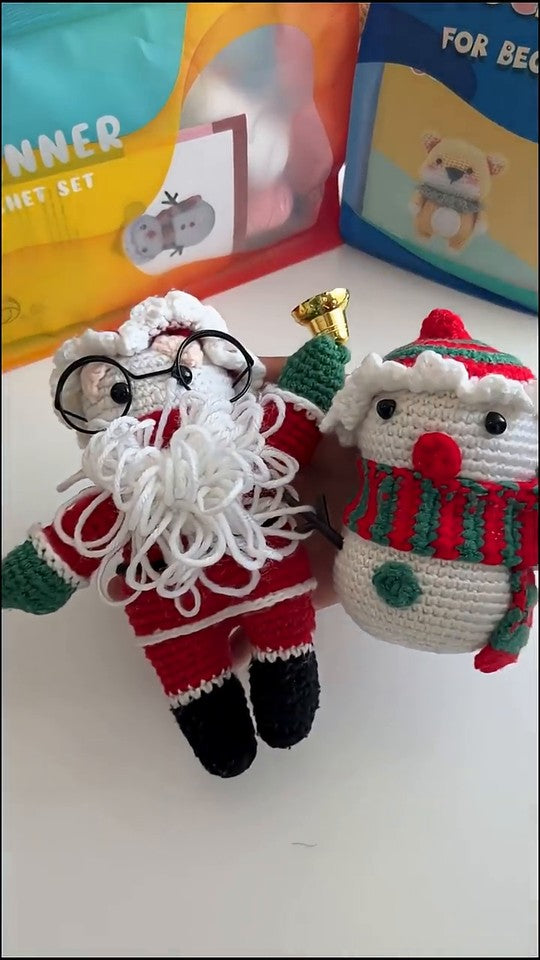
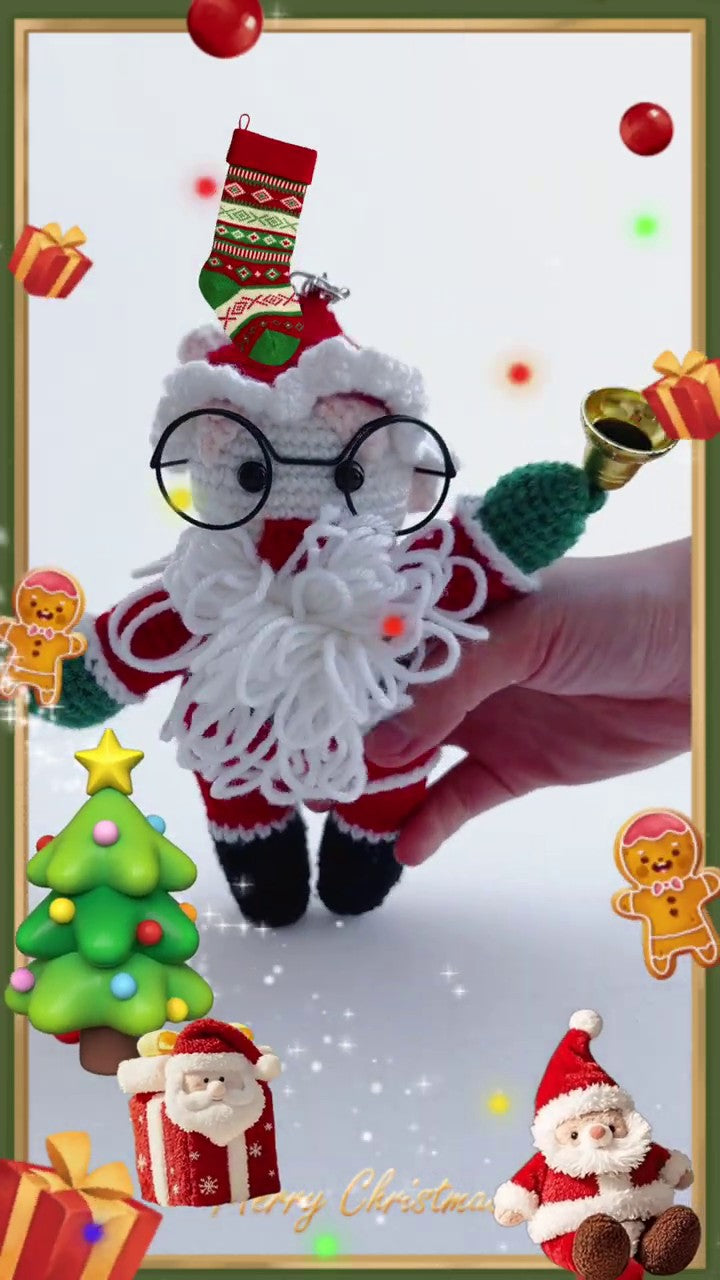
Choose Santa if the red outfit, white beard and familiar holiday personality make you smile. Look at how the face, hat, beard and any accessories are constructed: these details may involve separate finishing steps.
Forfunly’s Santa with Glasses design features glasses, a white beard and a red suit. It is a design to explore, rather than a verified easiest-first recommendation; confirm the required skills and instruction support before choosing it as your first toy.
Explore the Santa with Glasses DIY kit →

A snowman for a winter keepsake
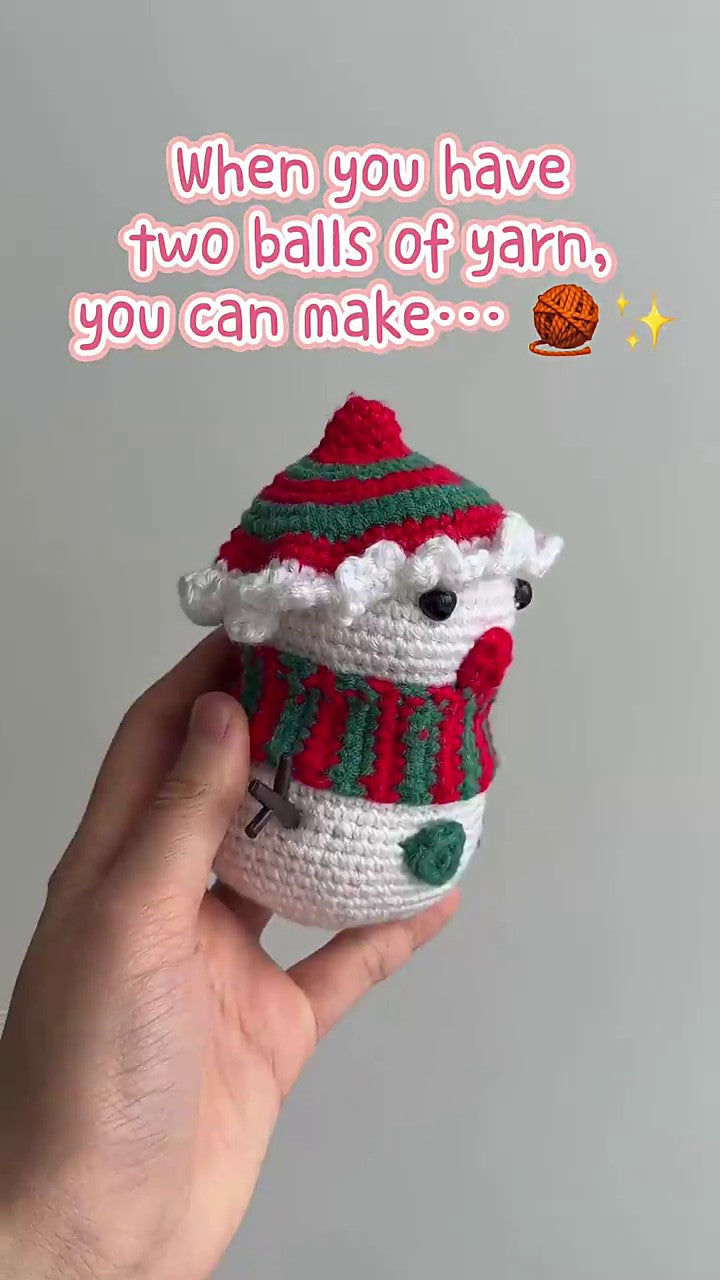
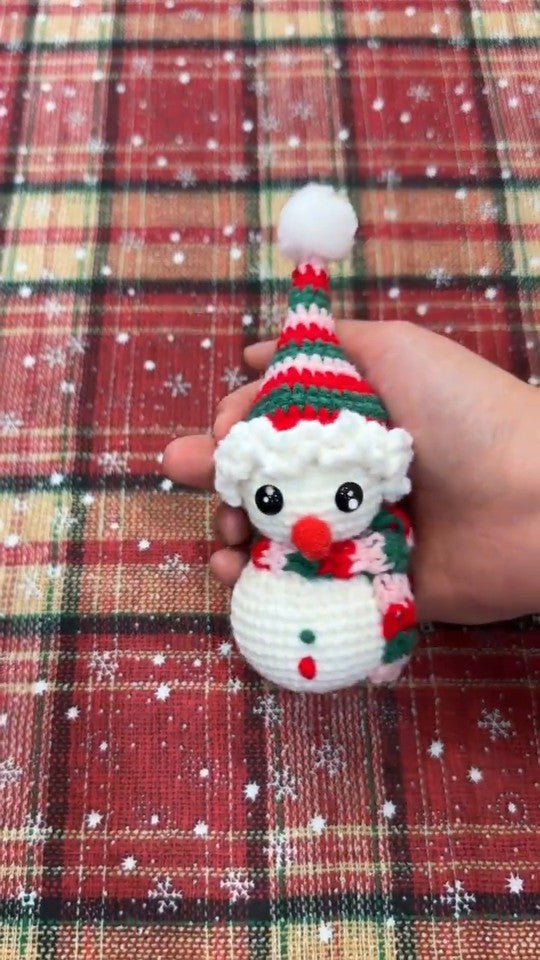
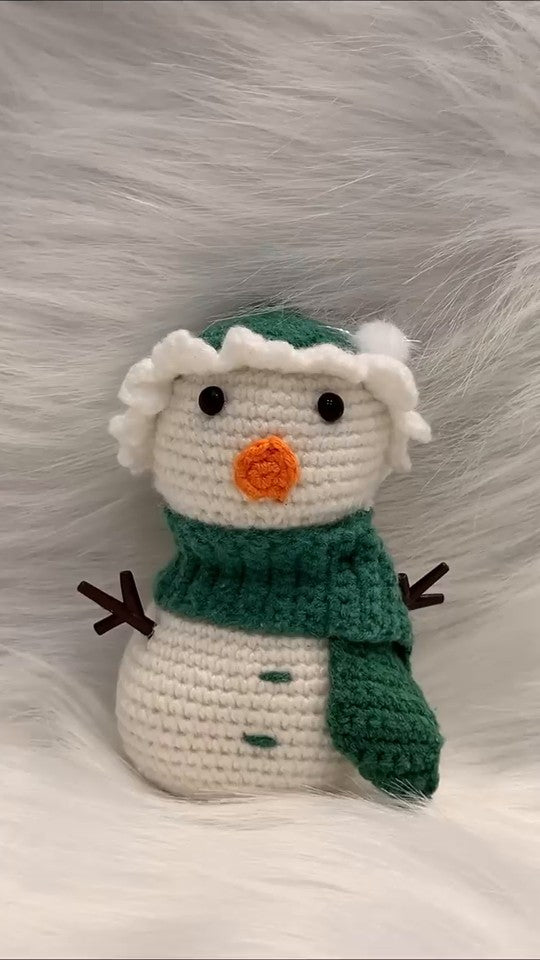
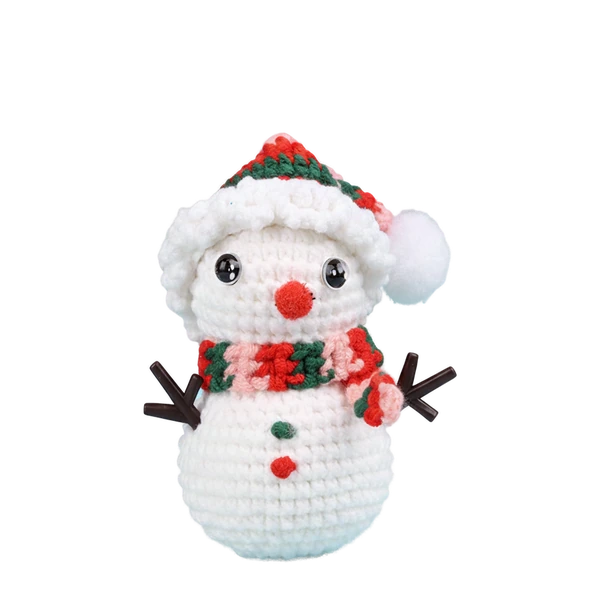
A snowman suits someone who enjoys winter characters and dressing a little figure in a hat or scarf. Compare the body construction and accessories between designs. A rounded body may look simple while the hat, arms or finishing still need practice.


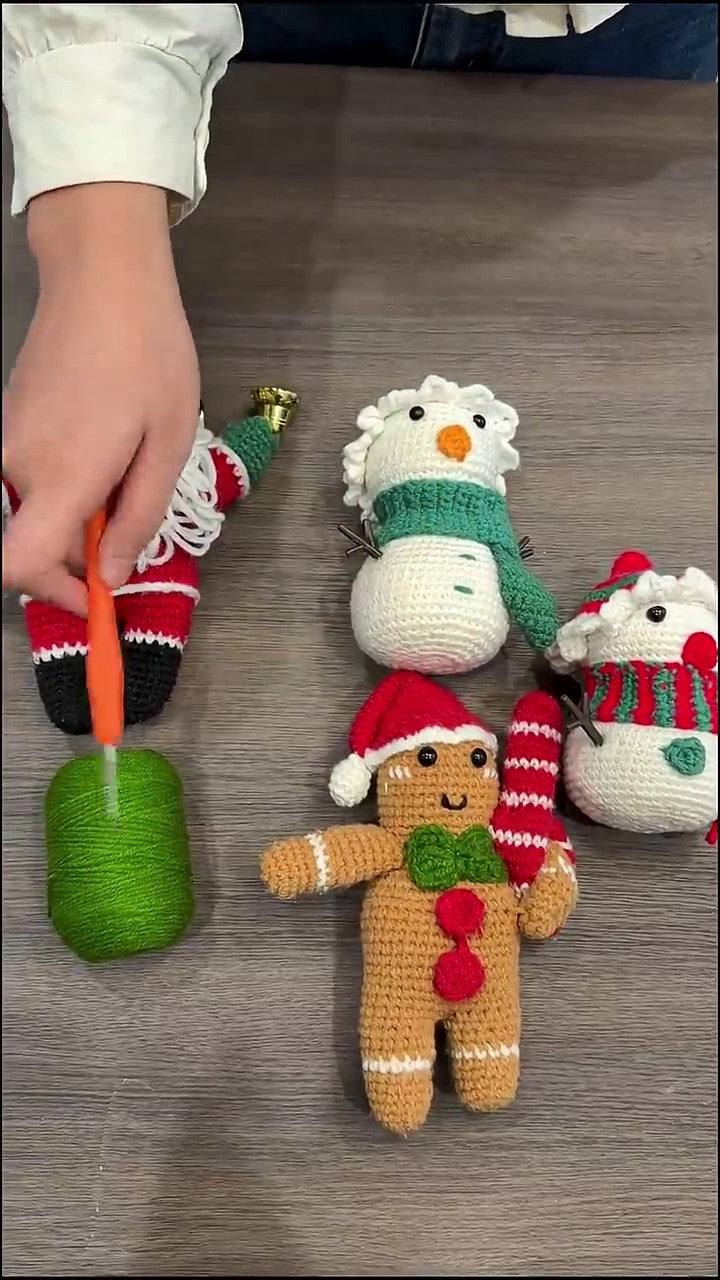
Different hats, scarves and face details give each snowman its own personality. Compare the instructions for each design.
Gingerbread or reindeer for a playful holiday friend
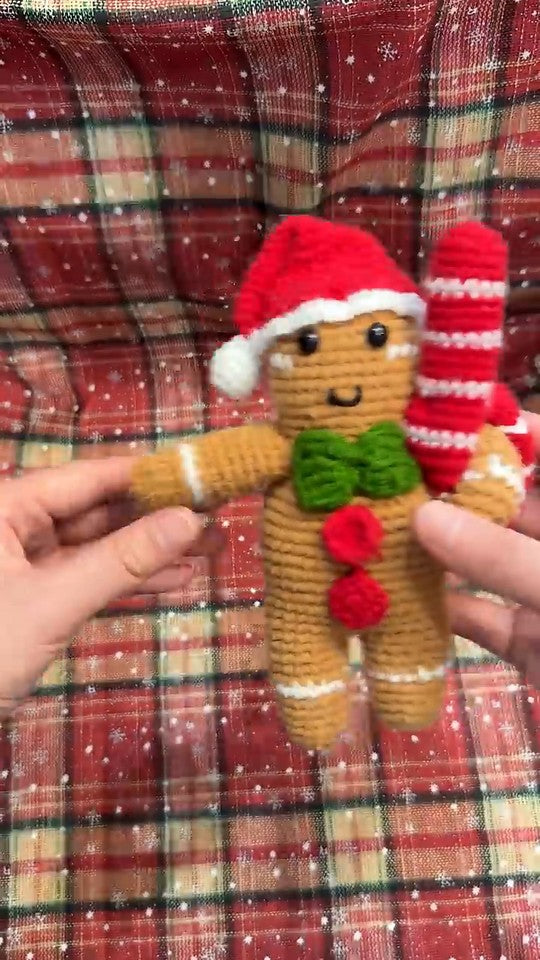
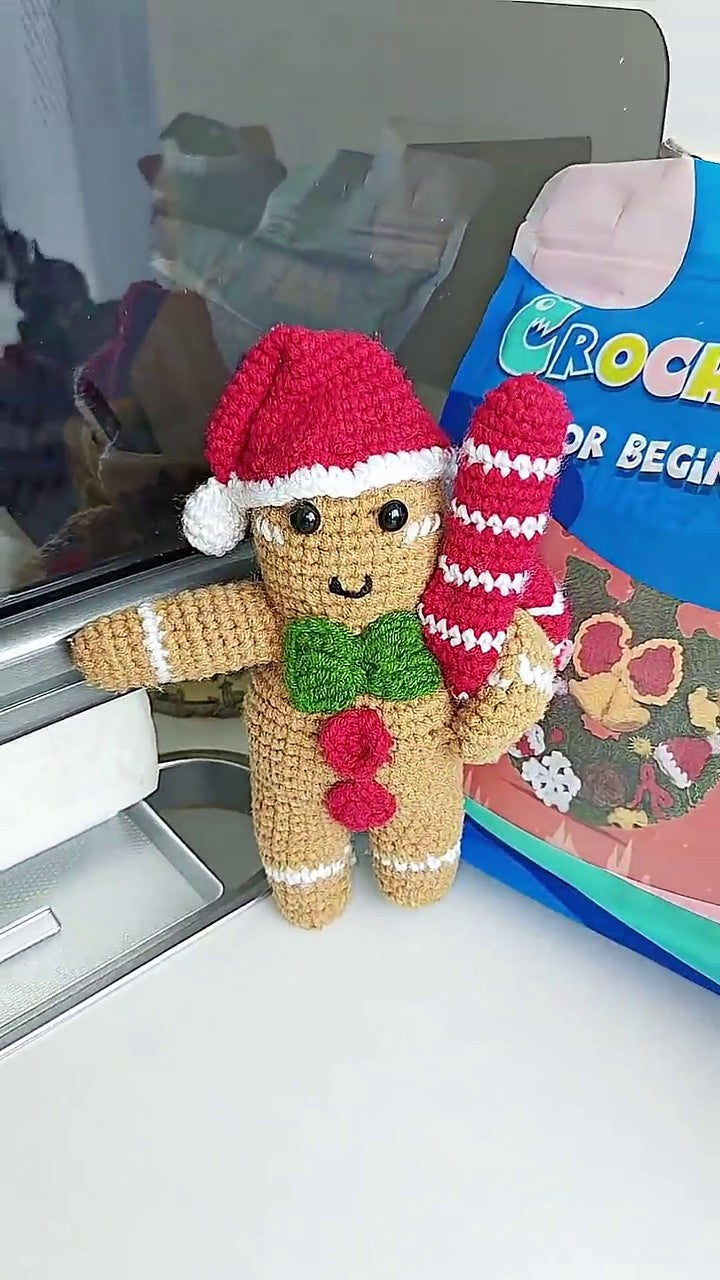
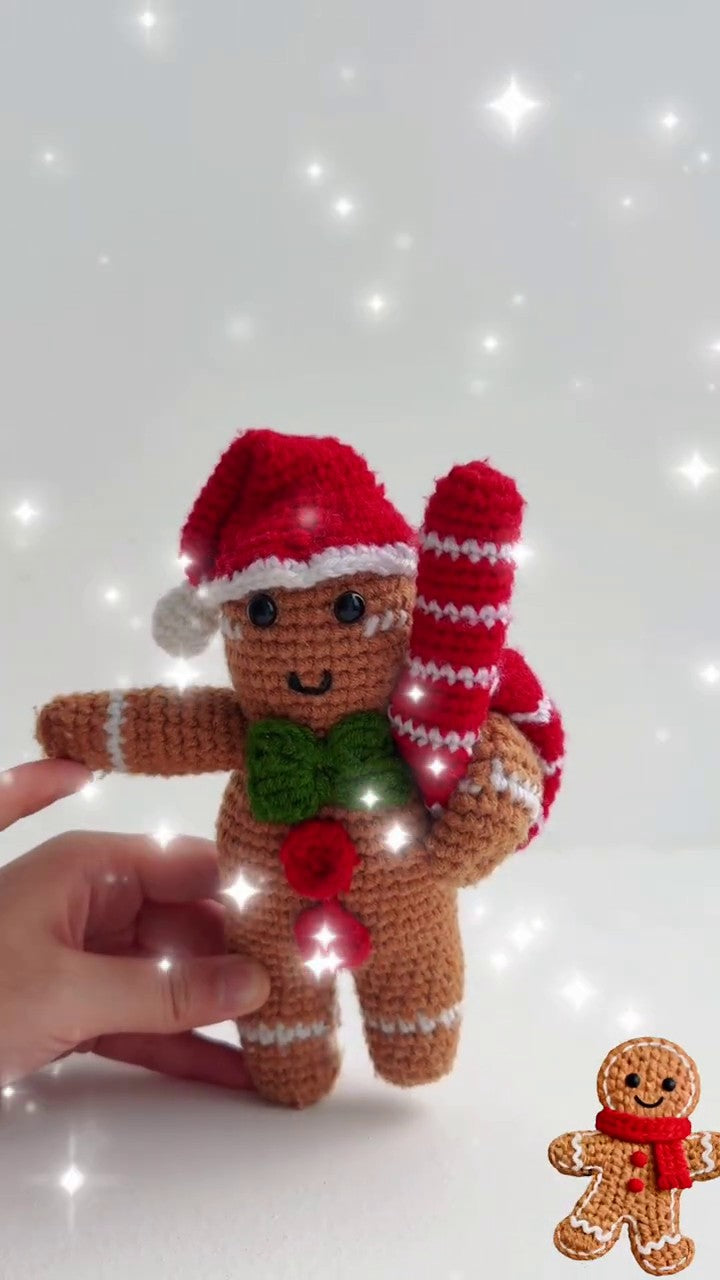
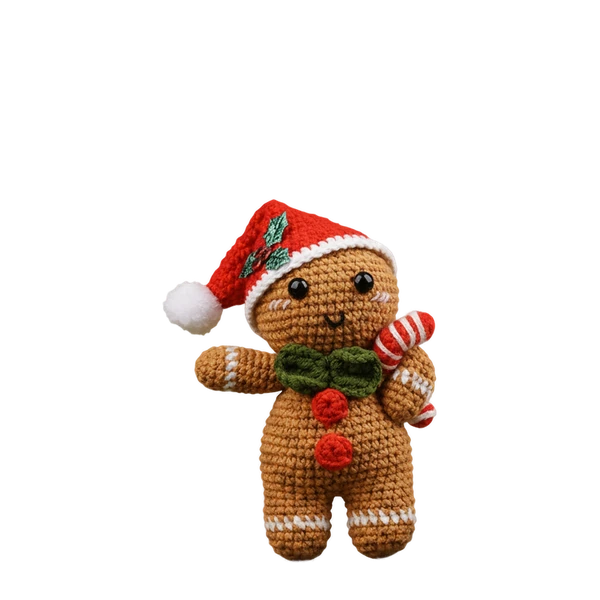
A gingerbread character can make a cheerful seasonal display; a reindeer may appeal to an animal lover. Inspect narrow limbs, antlers and small decorative parts, and ask how they attach. Choose based on the actual instructions, not an assumed difficulty level.
Compare the Christmas characters →
Check the contents before you order
A kit is most useful when you know what is inside it. Do not assume every listing includes the same tools or that every instruction format teaches crochet from the beginning.
- Yarn: check the colours, quantities and guidance for matching the intended result.
- Hook and tools: confirm whether a hook is included, its size, and any sewing needle or stitch markers needed.
- Stuffing and details: check whether stuffing and any eyes, decorations or accessories are supplied.
- Instructions: confirm the language, written or video format, access method and whether the project pattern is included.
- Starting skills: ask whether basic stitches are taught or assumed, and which assembly techniques are required.

Use a layout like this to check your own kit before starting. Match each item to your project’s supply list, then identify anything you need to provide separately. A printed booklet in this example does not establish the instruction format for a Christmas kit.
For a gift, check these details before wrapping the kit. A recipient who already crochets may own the tools; a first-time maker may need more support. Ask about anything missing from the listing rather than finding out halfway through.
Use the crochet kit buying checklist →
Practise the skills your character needs
Single crochet and consistent tension
Practise a small piece before starting the character. Aim for stitches you can identify and work into without forcing the hook. For stuffed pieces, gaps in the fabric can let stuffing show. If the fabric is difficult to work into, check your tension, yarn and hook against the pattern’s guidance rather than simply pulling tighter.

Want a little holiday inspiration before you start? Visit Forfunly on YouTube to see our crochet characters, yarn-to-character reveals and Christmas project ideas. These short videos show the finished designs and making inspiration; check your selected kit for its project instructions.
Shaping with increases and decreases
An increase adds stitches; a decrease reduces them. These changes help shape a head or body. A single crochet increase commonly means two single crochet stitches worked into one stitch. Follow the pattern for the exact placement and decrease method.
Practise single crochet increases and decreases →
From practice stitches to your first character
Read one full section before you crochet it
Check the abbreviations, materials and construction notes, then read the first section before starting. In US terminology, “sc” means single crochet; UK terminology uses different names. Confirm which system your instructions use before following a stitch tutorial.
Mark the round and count as you go
If the pattern uses continuous rounds, mark the first stitch and move the marker as directed. Count at the end of each round and compare with the pattern. Finding one extra stitch early is much easier than correcting the shape after several more rounds.
Finish the main shape before rushing the details
Follow the pattern’s order for shaping and stuffing. Add stuffing gradually and check that the shape remains even. If the pattern includes safety eyes or other parts that must be fitted before closing, deal with them at the specified stage.
Position separate parts before sewing
Check the placement of arms, hats and decorations from the front and side before securing them. Use removable markers or pins if appropriate for your workspace, and remove them afterwards. Follow the project instructions for attaching each part.
Prepare for sewing amigurumi parts together →
When something looks wrong
- The shape differs from the photo: compare your stitch count and increase or decrease placement with the pattern.
- Stuffing shows through: check fabric gaps, tension, the recommended hook and whether the shape is overfilled.
- Parts look uneven: compare the attachment points from the front and side before sewing permanently.
- A small detail feels frustrating: pause and practise that technique separately, then return to the project.
Make room for a relaxed Christmas project
If your character is a gift, plan backwards from the day you want to give it. Allow for delivery, practising unfamiliar stitches, making the pieces and finishing. A short transformation video shows the reveal, not the hours or practice behind it.
Use milestones rather than promising yourself a one-evening finish: learn the needed stitches, complete the main shape, add the details, then check the finished piece. If time is tight, choose a project whose instructions and construction you already understand.
Questions beginners often ask
Can I start if I have never crocheted before?
Yes, you can begin learning with a Christmas project in mind. First confirm that the chosen instructions cover the basics, or practise those basics separately. A festive design is not automatically a complete beginner lesson.
Which Christmas character is the easiest?
There is no reliable answer based on the character alone. Compare the pattern, number of separate parts, shaping and instruction support. Choose the design with the clearest route from your current skills to the finished piece.
How long will my first project take?
It depends on the pattern, your experience and how often you need to practise or undo stitches. Without a tested estimate for that particular kit, plan around the project’s stages rather than a fixed number of hours.
Can I give the finished character to a child?
Check the finished item’s intended use and age suitability first. Small parts, detachable decorations and construction affect suitability; a handmade decoration should not automatically be treated as a child-safe toy.
Choose one little friend to begin
Your first project does not need to fill a whole shelf. One Santa, snowman or gingerbread friend is enough to learn something new and make a small piece of Christmas your own.
Browse Forfunly’s Christmas designs, choose the character that makes you smile and check the selected kit’s contents and instructions before ordering.
Explore the Forfunly Christmas collection →
Which would you crochet first: Santa, a snowman, a gingerbread friend or a reindeer?
FORFUNLY CROCHET JOURNAL · CHRISTMAS PROJECTS
What would you like to make next?
- Your First Snowman Crochet Kit: What to Check Before You Start — Organize your tools and materials and check the instructions before the first stitch.
- Christmas Crochet Ornaments: Tree or Tabletop? — Choose a place for your character, then check hanging points, support and scale.