Forfunly crochet guides
Best Yarn for Amigurumi: Weight, Fiber and Hook Size
Many amigurumi patterns are written for a smooth medium-weight yarn worked with a hook smaller than the yarn label suggests. This guide explains how to choose yarn by weight and fiber, which hook size to start with, and how to check the result on a small sample before you begin a character.
Illustrations updated
The short answer
Start with the yarn and hook your pattern lists. If you are choosing yourself, a smooth, light-colored medium (#4, worsted) yarn in acrylic or cotton shows each stitch clearly. Use a hook smaller than the label’s range so the fabric hides the stuffing: amigurumi designer June Gilbank of PlanetJune uses a 3.5 mm (E-4) hook with worsted yarn. Make a small sample and change one hook size at a time.
Build your crochet foundations · Lesson 3 of 9 · See the full learning path
At a glance
| Topic | Choosing yarn and a hook for amigurumi (small stuffed crochet characters) |
|---|---|
| Common starting yarn | Medium (#4) yarn, sold as worsted, afghan or aran, unless your pattern says otherwise |
| Hook for amigurumi | Smaller than the label range; PlanetJune uses 3.5 mm (E-4) with worsted yarn |
| Label range for #4 yarn | 5.5–6.5 mm (I-9 to K-10½) for general crochet, per the Craft Yarn Council |
| Fibers covered | Acrylic, cotton, chenille and velvet-style yarns |
| Forfunly DIY kits | Include yarn for the pictured design, a crochet hook and the tools to finish it |
| Related kits | DIY kits that include yarn for the design |
What you need
A yarn with a readable label (weight category, fiber and length), two or three hooks in neighboring millimeter sizes, a stitch marker and a ruler for a small sample. If you are making a kit, use the yarn it supplies and check its product page for the hook size.
Forfunly does not sell yarn or hooks separately and does not rate yarn brands. The hook ranges here are Craft Yarn Council guidelines; your pattern’s instructions come first.
What is the best yarn for amigurumi?
No single yarn is best, but yarns that work well for amigurumi share three traits: a smooth surface so you can see each stitch, enough body to hold a shape once stuffed, and a weight that matches your pattern. Many amigurumi patterns are written for medium (#4) yarn, also sold as worsted or aran.
Choose a light or mid color for your first character; dark and fuzzy yarns make stitches harder to see. Buy enough of one yarn line for the whole character. Two yarns with the same weight label can still differ in thickness, so mixing them can make one piece larger than another.
- The weight category matches the pattern, for example #4 medium
- A smooth, plied yarn rather than a fluffy or textured one
- A light or mid color for a first project
- Enough of one yarn line for every piece of the character
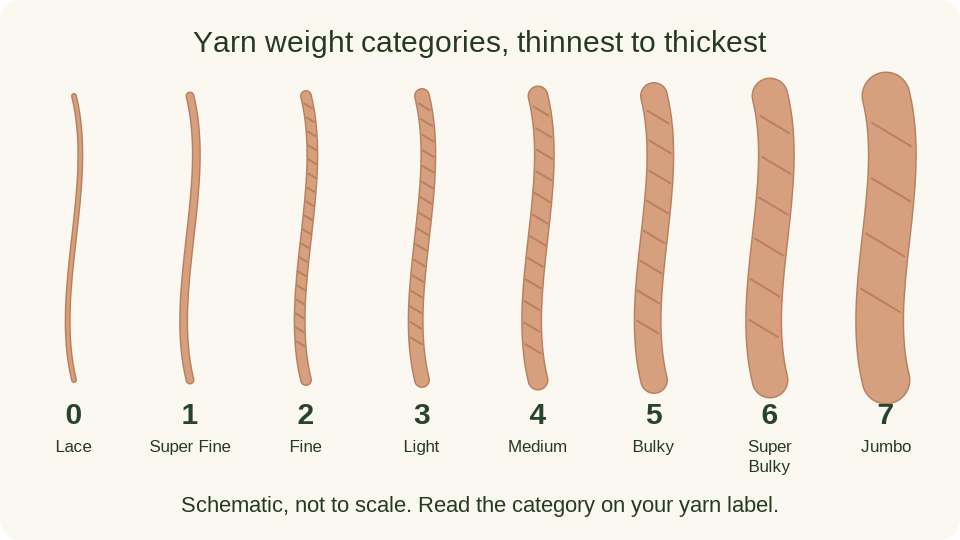
Yarn weight chart: categories and crochet hook ranges
US yarn labels group yarn into numbered weight categories from the Craft Yarn Council. The number describes thickness, not how heavy the ball is; the ounces or grams on the label give its mass. Each category has a recommended hook range for general crochet. Amigurumi usually goes smaller, as the next section explains.
The Craft Yarn Council calls these ranges guidelines only, and has added a size 8 category that is not shown here. Outside North America the same yarns may be labeled by ply: DK is often called 8-ply and worsted 10-ply, even though the name does not count the strands.
| Category | Yarns sold as | Hook (mm) | US hook |
|---|---|---|---|
| 0 Lace | Fingering, 10-count crochet thread | Steel 1.4–1.6 mm; regular 2.25 mm | Steel 6, 7, 8; regular B-1 |
| 1 Super Fine | Sock, fingering, baby | 2.25–3.5 mm | B-1 to E-4 |
| 2 Fine | Sport, baby | 3.5–4.5 mm | E-4 to 7 |
| 3 Light | DK, light worsted | 4.5–5.5 mm | 7 to I-9 |
| 4 Medium | Worsted, afghan, aran | 5.5–6.5 mm | I-9 to K-10½ |
| 5 Bulky | Chunky, craft, rug | 6.5–9 mm | K-10½ to M-13 |
| 6 Super Bulky | Super bulky, roving | 9–15 mm | M-13 to Q |
| 7 Jumbo | Jumbo, roving | 15 mm and larger | Q and larger |
What hook size is best for amigurumi?
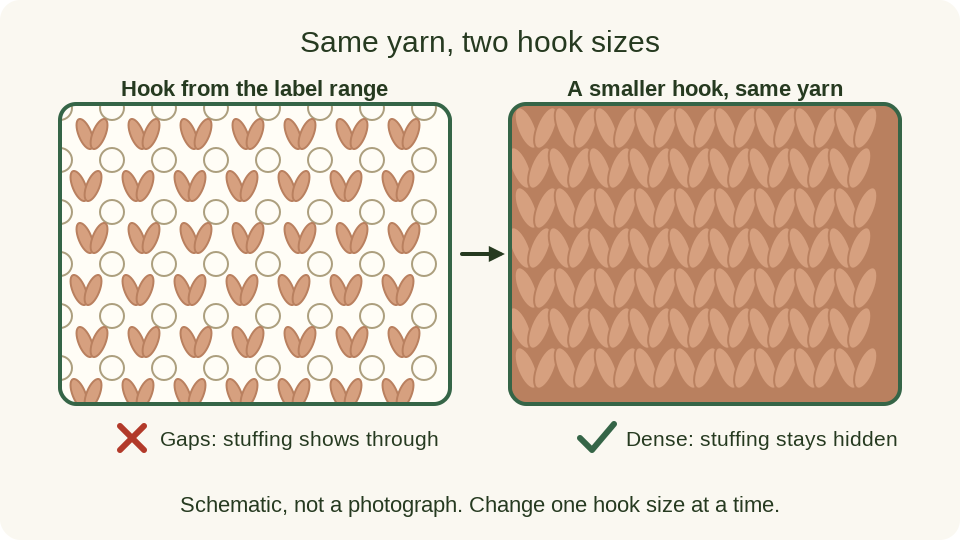
Use a hook smaller than the yarn label suggests. Amigurumi needs dense fabric so the stuffing does not show through gaps between stitches. With medium (#4) yarn, June Gilbank of PlanetJune uses a 3.5 mm (E-4) hook, well below the 5.5–6.5 mm label range for that weight. With DK yarn she uses 2.75 or 3.25 mm (C-2 or D-3).
Treat those sizes as a starting point, not a rule. If stuffing shows between stitches, try the next smaller hook on a sample. If the hook is hard to push into each stitch, try the next larger one. Change only the hook between samples so you know what made the difference.
What size crochet hook should a beginner use?
To learn stitches on a flat practice piece, use medium (#4) yarn and a hook from its label range; the Craft Yarn Council lists 5.5–6.5 mm (I-9 to K-10½) for that weight. A mid-size hook with smooth yarn makes loops easier to see and count than a small hook with thin yarn.
When you move on to amigurumi, switch to the smaller hook your pattern names. Read the millimeter size printed on the hook: letter and number names vary between makers, so the Craft Yarn Council advises relying on millimeters.
The best crochet hook for a beginner is one that feels comfortable in your hand. Hooks come in two head styles, in-line and tapered, and neither suits everyone. If you can, try one of each before buying a full set.
Do you need an ergonomic crochet hook?
An ergonomic crochet hook has a thicker, shaped or cushioned handle. It is a comfort choice, not a requirement. Amigurumi uses small hooks and tight stitches, and some crocheters prefer a wider grip for those sessions.
Check the millimeter size and head style just as you would for a plain hook. This guide makes no health claims for any handle design; if crocheting is uncomfortable, take breaks and stop if it hurts.
Acrylic vs cotton yarn for amigurumi
Acrylic is a common choice in amigurumi patterns; PlanetJune recommends 100% acrylic worsted for its designs. Acrylic yarns still vary in thickness, loft, stretch, softness and shine, even under the same weight label.
Cotton gives a different look and feel, and cotton yarns vary too: in one PlanetJune test, two cottons both sold as worsted made different-sized pieces with the same hook and pattern. Mercerized cotton is processed for a smoother surface and more sheen.
Choose the fiber your pattern was designed with, or the look you want, then make a sample with your hook. Do not mix acrylic and cotton in one character unless the pattern says to, because they can work up to different sizes.
- Weight category and length per ball on the label
- Fiber content: 100% acrylic, 100% cotton or a blend
- Surface: smooth and plied, or fuzzy and textured
- Care instructions, if the finished piece will be washed
- A small sample with your hook before you start
Chenille and velvet yarn for amigurumi
Chenille and velvet-style yarns have a soft pile that makes plush characters, but the pile hides your stitches. PlanetJune found chain stitches hard to see in chenille, and fuzzy yarns in general make mistakes harder to spot and undo.
Check the label’s weight category and hook range rather than reusing a worsted pattern’s hook; a chenille yarn may not match the weight the pattern was written for. Mark the first stitch of each round, work in good light, and feel for the stitches with your fingers when you cannot see them.
For a first character, choose a smooth yarn. Try chenille once you can count stitches confidently.
Best yarn for beginners learning to crochet
For a first practice piece, choose a smooth, light-colored medium (#4) yarn that is not splitty, fuzzy or very dark. You can see each stitch, count it and undo mistakes more easily.
Leave novelty yarns, chenille and fine thread until you can identify and count stitches without help.
Using the yarn in a crochet kit
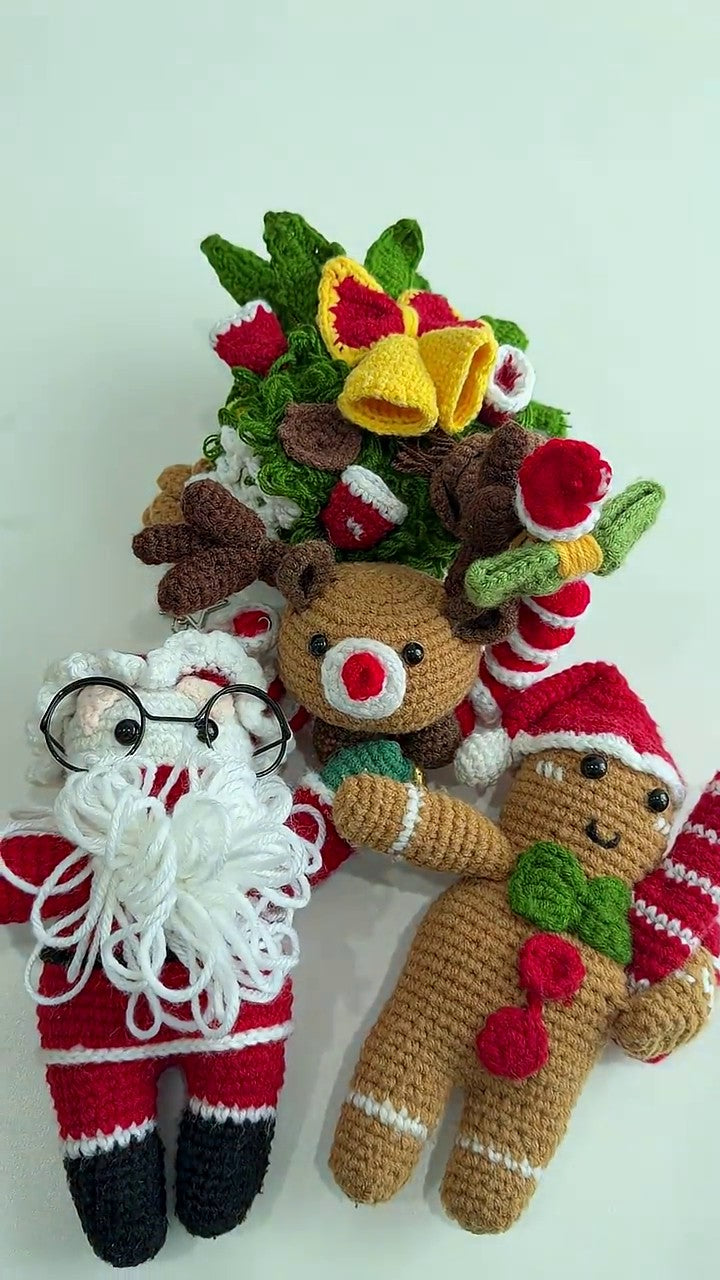
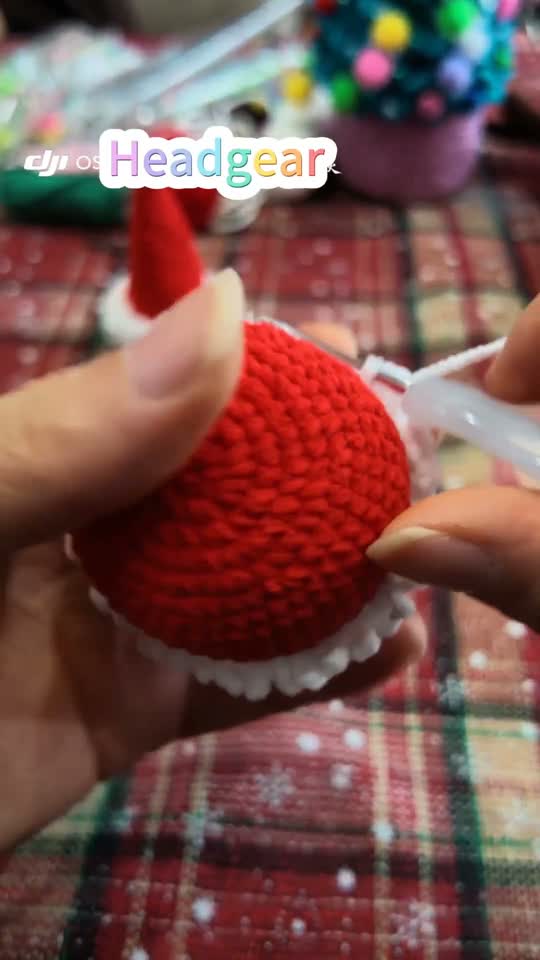
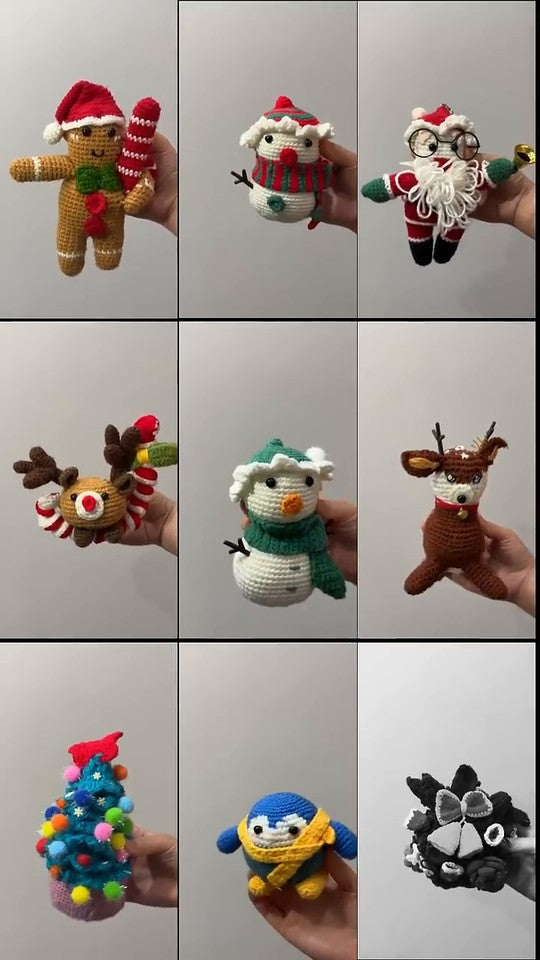
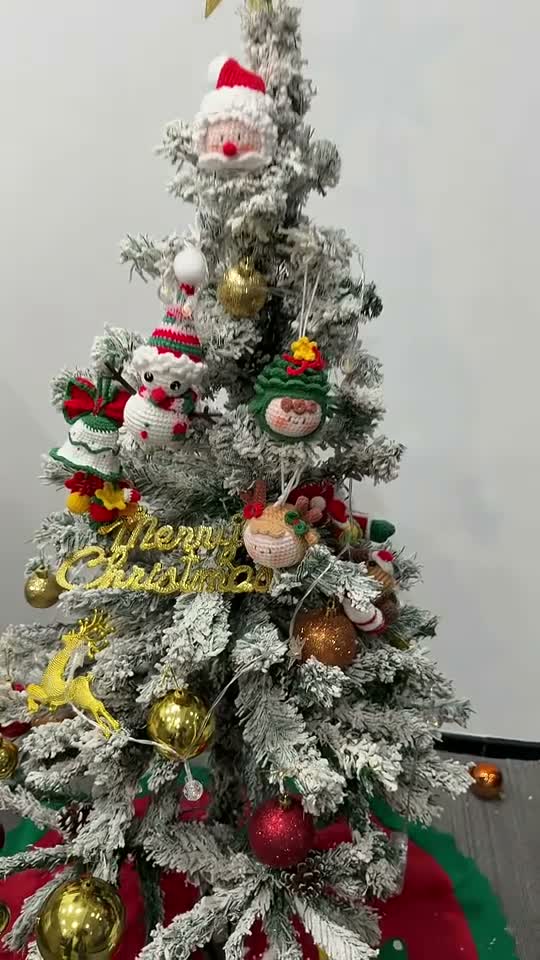
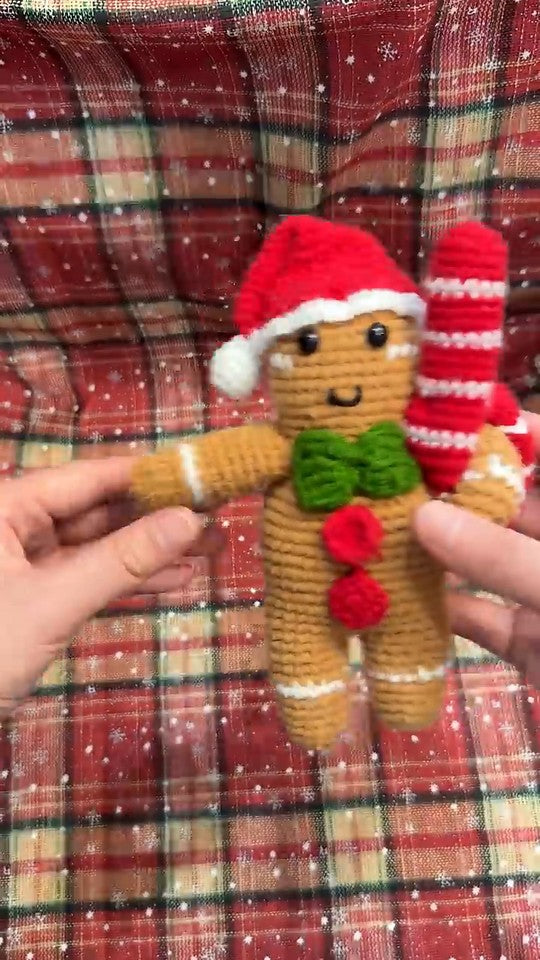
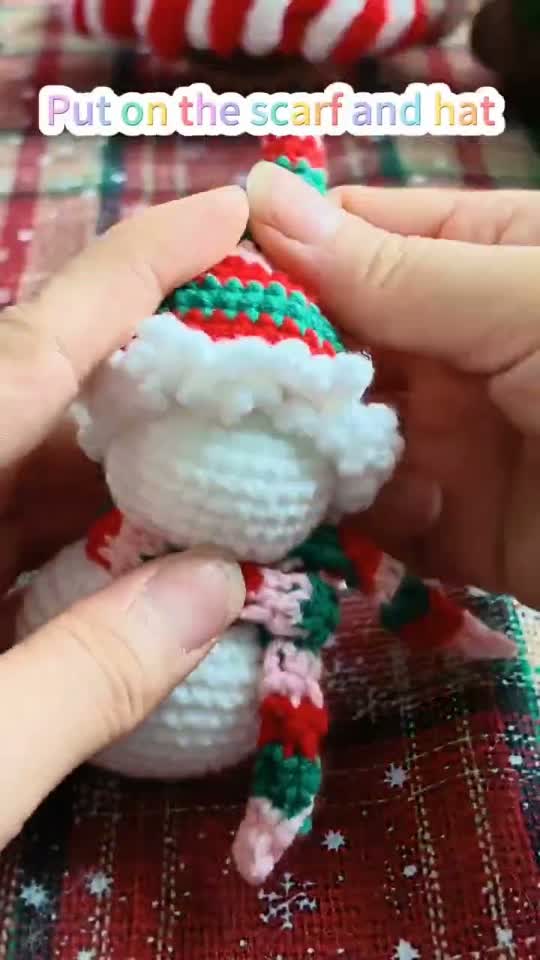
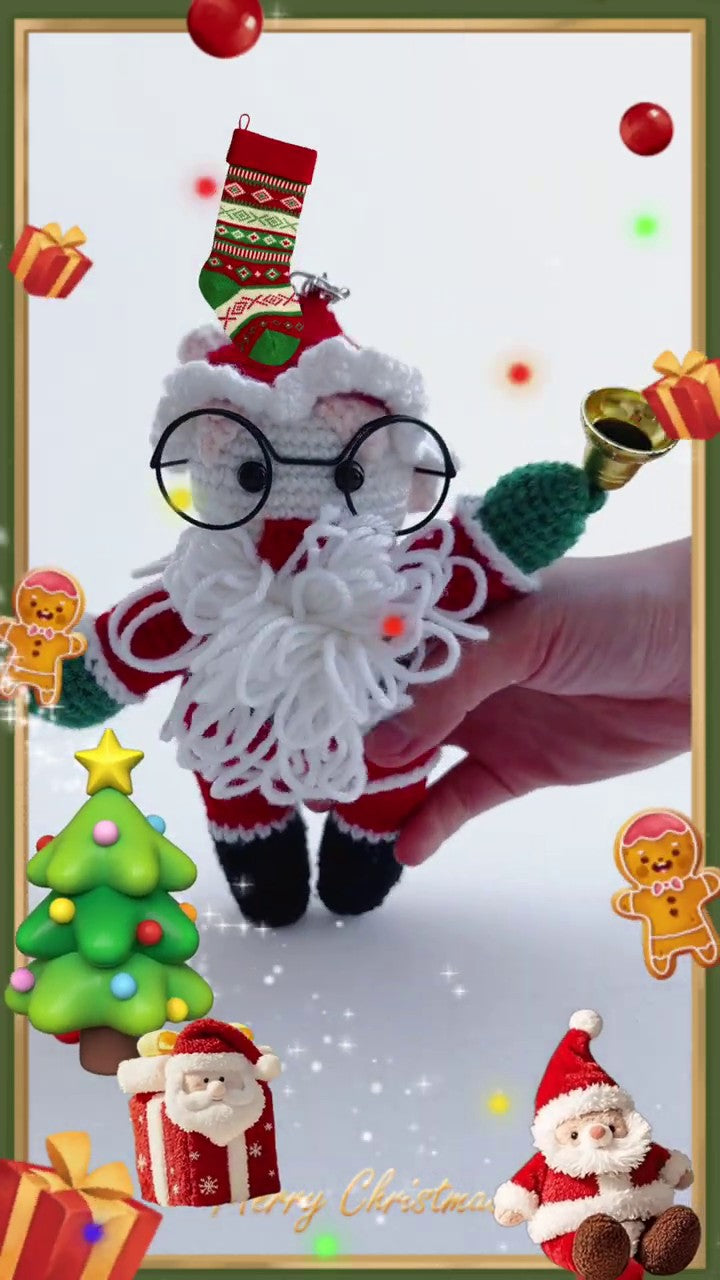
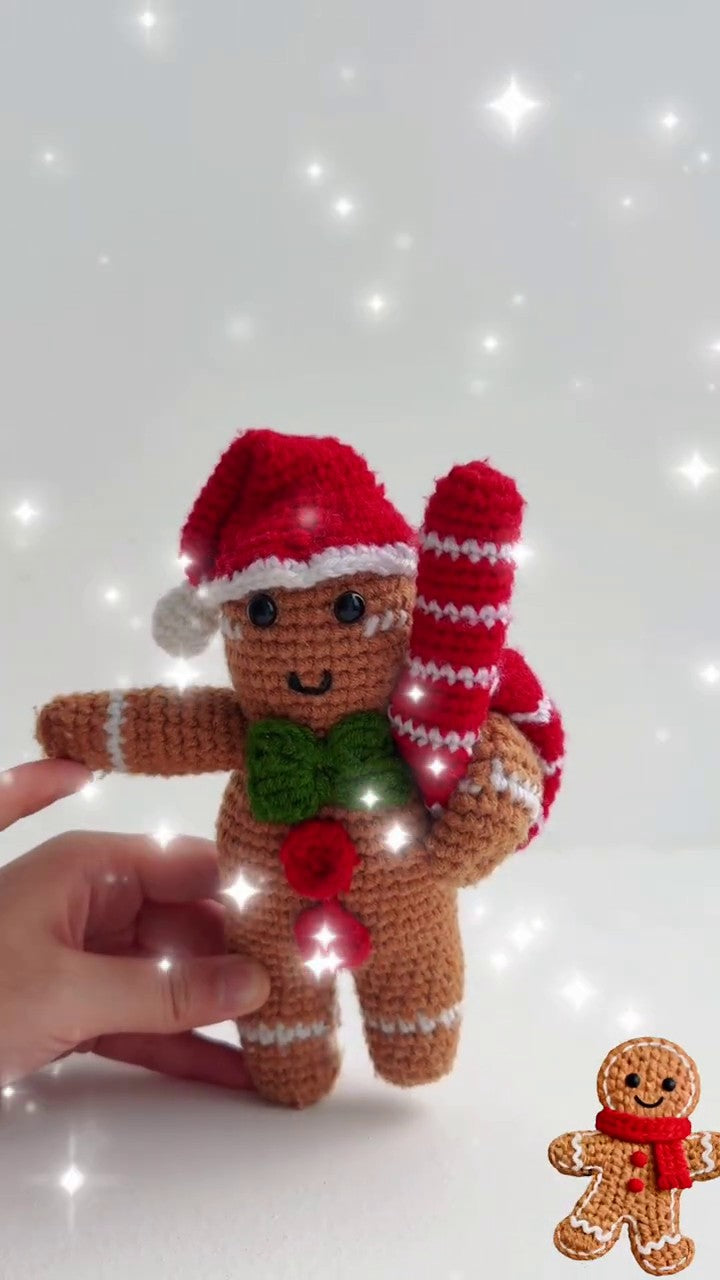
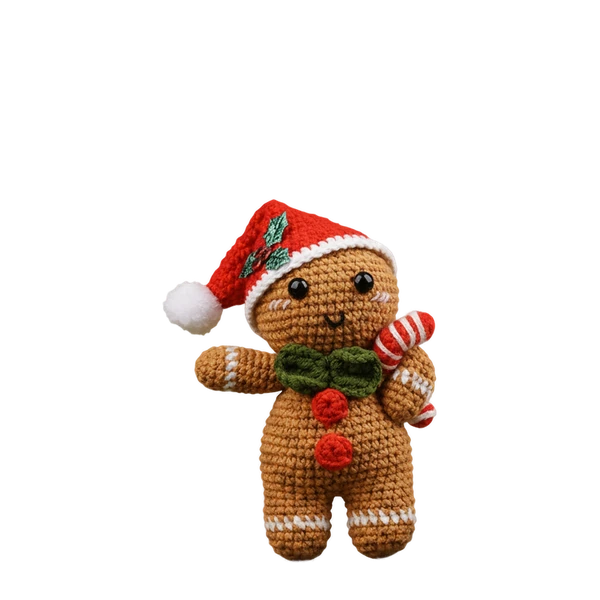
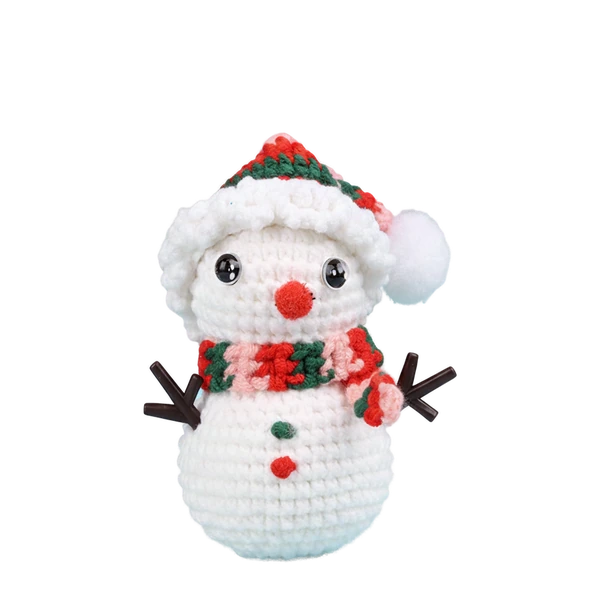
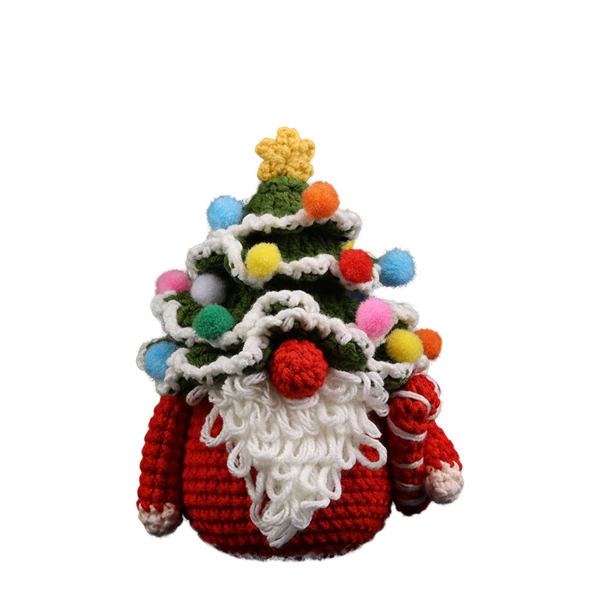
A DIY crochet kit takes the yarn choice off your list. Forfunly DIY crochet kits include yarn for the pictured design; the finished example in the photos is not included. The four Christmas kits (Round Reindeer Face, Christmas Tree Hat, Santa Face and Christmas Bell charm) use chenille yarn.
Each Forfunly DIY kit also includes a crochet hook, so you do not need to match a hook to the yarn yourself.
Common mistakes
| Problem | Likely cause | Fix |
|---|---|---|
| Stuffing shows between stitches | The hook is too large for the yarn, or the tension is loose | Try the next smaller hook on a sample, then check the gaps guide |
| The finished character is much larger or smaller than the photo | A different yarn weight or hook from the pattern | Match the pattern’s weight category and hook in millimeters, then compare a sample |
| Two pieces of one character are different sizes | Yarn lines were mixed, or the hook changed partway | Use one yarn line and the same hook for every piece |
| You cannot see where to insert the hook | Dark, fuzzy or chenille yarn | Practice with smooth, light yarn first; mark each round and work in good light |
DIY kits that include yarn for the design
These Christmas kits include chenille yarn, a crochet hook, stuffing, eyes, a yarn needle, stitch markers and an English video tutorial; the finished example is not included.


Frequently asked questions
What weight yarn is used for amigurumi?
Many patterns use medium (#4) worsted yarn. Any weight can work if you match the hook to it; a different weight gives a different finished size.
Is cotton or acrylic yarn better for amigurumi?
Neither is better for every project. Acrylic is common in amigurumi patterns; cotton gives a different look and feel. Use what your pattern lists, or make a sample of each.
What size hook do I use with worsted yarn for amigurumi?
Start smaller than the label suggests. June Gilbank of PlanetJune uses a 3.5 mm (E-4) hook with worsted yarn. Adjust one size at a time until no stuffing shows. Fix gaps in amigurumi →
What size crochet hook is best for beginners?
For a flat practice piece in medium (#4) yarn, use a hook in the 5.5–6.5 mm label range. For amigurumi, use the smaller hook your pattern names.
Can I use chenille yarn for amigurumi?
Yes, but the pile hides your stitches. Check the label’s weight category and hook range, mark each round and count carefully.
Do Forfunly kits include a crochet hook?
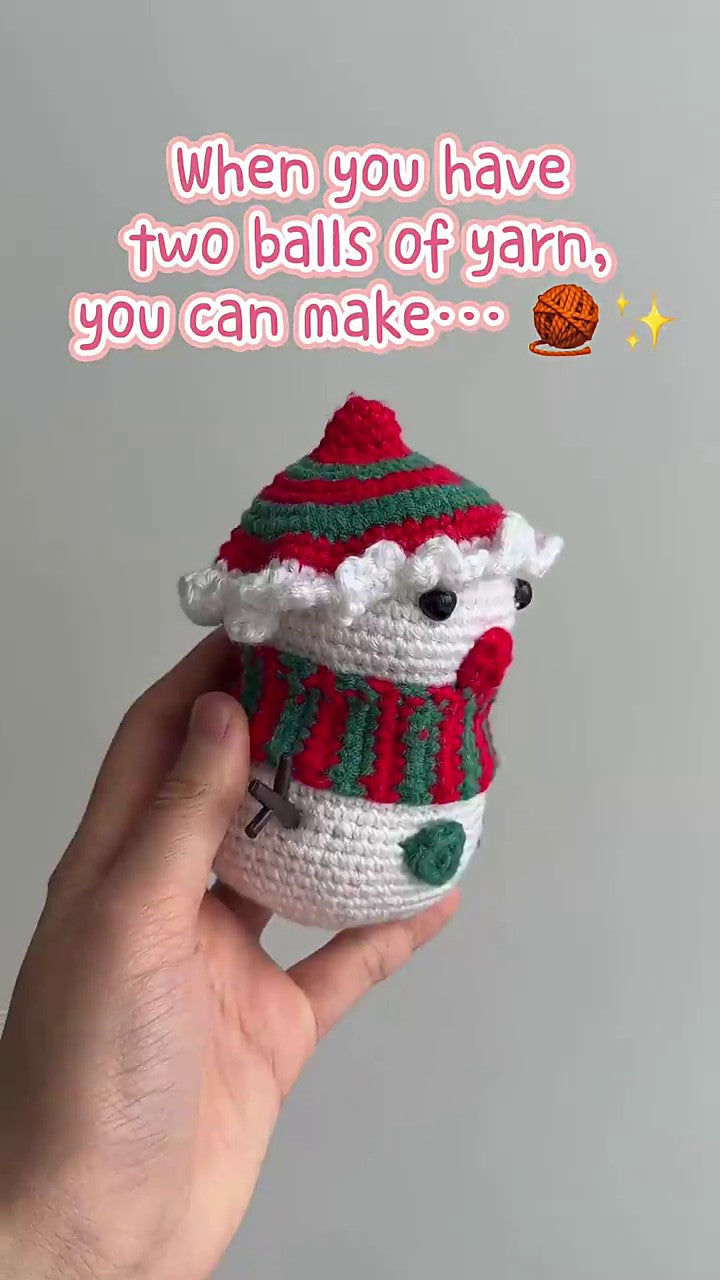
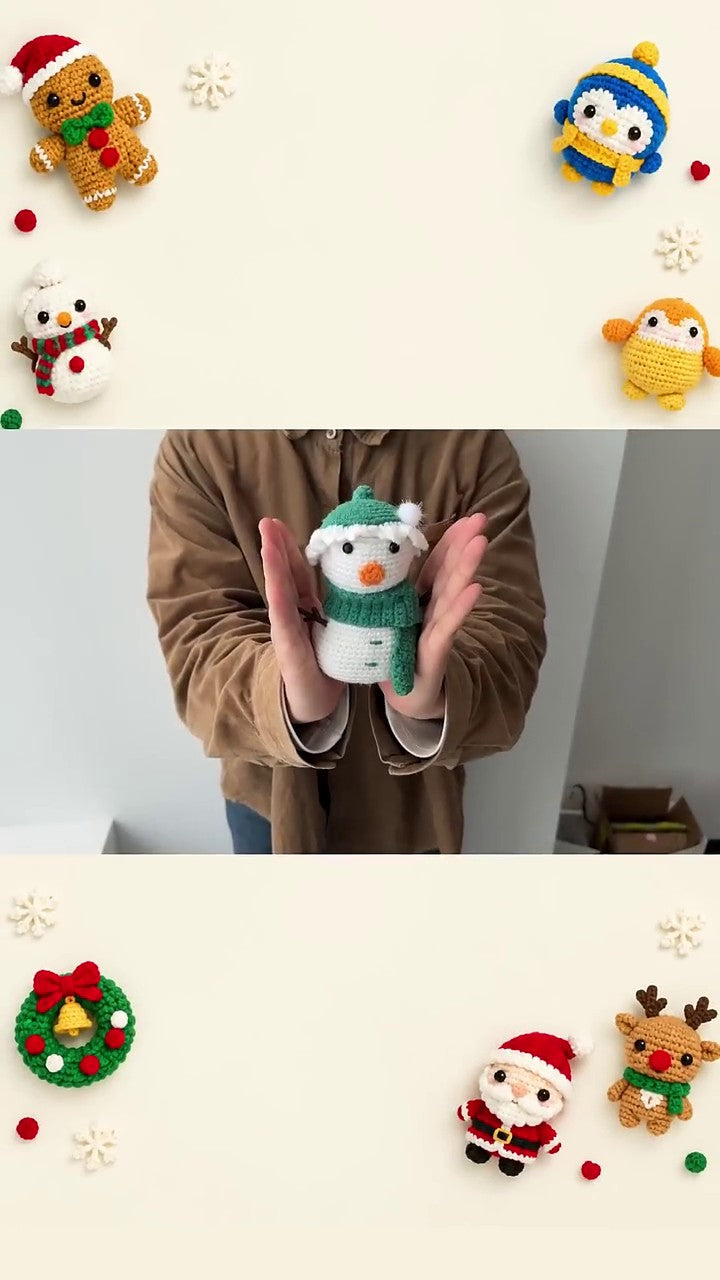
Yes. Forfunly DIY kits include a crochet hook, along with the yarn, stuffing, eyes, yarn needle and stitch markers for the project. The Striped Hat Snowman kit, for example, includes a 2.5 mm hook. Browse DIY crochet kits →
Find your next crochet design
Choose a project to make or a finished piece to buy. Check the selected option before ordering.
- Crochet Gauge: How to Measure and Adjust Your Swatch
- Learn with a US single crochet practice square
- Ask about a product’s contents or instructions
Before ordering, read the current shipping and returns information.
Further learning
For stitch names, see the Craft Yarn Council crochet abbreviations. For difficulty, see its project skill levels. Follow the pattern for your project. Check the product page for what you will receive.
Sources for the terms in this lesson:
- Craft Yarn Council: Standard Yarn Weight System: weight categories 0–7, yarn types per category, recommended crochet hook ranges in mm and US sizes; guidelines only (read November 5, 2026)
- Craft Yarn Council: Hooks & Needles: letter and number sizes vary by maker; rely on the millimeter size (read November 5, 2026)
- PlanetJune by June Gilbank: Yarn for Amigurumi: most amigurumi patterns use worsted weight; 8-ply and 10-ply names; 2.75/3.25 mm hooks with DK yarn (read November 5, 2026)
- PlanetJune by June Gilbank: Worsted Weight Yarn Comparison: 100% acrylic worsted recommended for its designs; same-label yarns vary; avoid mixing yarns in one piece (read November 5, 2026)
- PlanetJune by June Gilbank: Cotton Yarns, an investigation: two worsted cottons made different-sized pieces with the same hook; mercerized cotton (read November 5, 2026)
- PlanetJune by June Gilbank: Fuzzy Yarn Tips: 3.5 mm (E) hook with worsted for amigurumi; fuzzy and chenille yarns hide stitches; light and touch help (read November 5, 2026)
- PlanetJune by June Gilbank: How To Crochet Double-Size Amigurumi: chain stitches were hard to see in chenille yarn (read November 5, 2026)
- PlanetJune by June Gilbank: Crochet Hook Styles: in-line and tapered hooks; no single best style; try more than one (read November 5, 2026)