How to Single Crochet, Step by Step

Single crochet is the shortest of the basic crochet stitches and the one most beginner projects are built on. It makes a firm, dense fabric that suits coasters, scarves and small stuffed toys. This guide walks through how to single crochet step by step, from the starting chain to a small practice strip of three rows, then covers how to count your stitches, keep the edges straight and fix the mistakes beginners make most often.
In this article

What single crochet is
In US patterns, single crochet is written as sc. One stitch is made in two moves: you pull up a loop, so two loops sit on the hook, then you pull through both loops at once. The result is a short, tight stitch with little space between rows.
UK patterns use different names for the same stitches. The Craft Yarn Council's crochet abbreviations list a US single crochet (sc) as a double crochet (dc) in UK terms. Check which terms your pattern uses before you start. If a pattern written in UK terms says dc and you work a US double crochet, your piece will come out taller and looser than the photo.
What you need
- Smooth, light-colored yarn. You can see where the hook goes much more easily than with dark or fuzzy yarn.
- A crochet hook in the size your yarn label suggests. The hook in our photos is 2.0 mm, used with thin white yarn.
- A stitch marker, to mark the first stitch of each row while you practice.
- A slip knot and a short chain. If you are new to both, start with how to make a slip knot and how to start a crochet chain.
How to single crochet step by step
1Make a starting chain
Make a slip knot on the hook and chain 11. That gives you 10 chains for 10 stitches, plus 1 extra chain that lifts the yarn to the height of the first stitch.

2Insert the hook into the second chain from the hook
Skip the chain next to the hook. Count back to the second chain and push the hook through it from front to back, under the top loop. Do not count the loop on your hook as a chain.
3Yarn over and pull up a loop
Wrap the working yarn over the hook from back to front. Turn the hook so it catches the yarn, then pull it back through the chain. You now have two loops on the hook.

4Yarn over and pull through both loops
Wrap the yarn over the hook again and pull it through both loops in one move. One loop stays on the hook. That is one single crochet.

Here is the full stitch in a short loop: insert the hook, yarn over, pull up a loop, yarn over and pull through both loops.

5Work across the row
Insert the hook into the next chain and repeat steps 3 and 4. Work one single crochet into each chain to the end. You should have 10 stitches. Count them before you turn, because a missing stitch is easier to fix now than three rows later.
6Chain 1 and turn
Chain 1, then turn the work over so the last stitch you made is now next to the hook. Lion Brand's turning chain glossary notes that the turning chain at the start of a single crochet row does not count as a stitch. Skip it and work the first stitch into the last stitch of the row below.
7Work the second row
Look at the top of the row. Each stitch shows a small V lying on its side. Insert the hook under both strands of the V of the first stitch, then make a single crochet as before. Work one stitch into each stitch across, 10 in total.

8Make a third row and fasten off
Chain 1, turn and work a third row of 10. To finish, cut the yarn with a tail of about 6 inches, yarn over and pull the tail through the loop on the hook, then tug it to close. Three rows are enough to see if your stitches are even. Pull the strip out and start again until the rows look the same height from end to end.

How to count single crochet stitches
Count along the top of the row, where each stitch shows one V. Start from the stitch next to the hook and do not count the loop on the hook or the turning chain.
- Place a stitch marker in the first stitch of each row. When you reach the marker on the way back, you know the next stitch is the last one.
- For longer rows, count in groups of five and move a marker along as you go.
- If the count is wrong, pull out the row back to the mistake. Single crochet unravels cleanly, so this takes less time than you might expect.
Keep the edges straight
Most problems with single crochet show up at the ends of the rows. The piece gets wider or narrower, or the sides start to slant. These are the usual causes.
| What you see | Likely cause | Fix |
|---|---|---|
| The piece gets narrower | The last stitch of the row was skipped | Look for the V right next to the turning chain on the far end and work into it |
| The piece gets wider | A stitch was worked into the turning chain | Skip the turning chain and start in the first real stitch |
| Holes at the start of rows | The turning chain is pulled too loose | Keep the chain snug before you turn |
| The first row curls or puckers | The starting chain is tighter than the stitches | Chain more loosely, or make the chain with a hook one size larger |
| Rows look uneven in height | The yarn tension changes from stitch to stitch | Hold the yarn the same way for each stitch and pull each loop up to the full width of the hook |
Common beginner mistakes
Working under one loop
Unless a pattern asks for front loop only or back loop only, insert the hook under both strands of the V. Working under one strand leaves a ridge on the fabric and makes the stitches looser.
Losing track of which side you are on
With single crochet worked in rows, both sides look alike. Clip a stitch marker to the front of the piece so you can tell which side faces you after each turn.
Stitches too tight to work into
If the hook will not slide into the stitches of the row below, relax the yarn hand and pull each loop up a little taller before you finish the stitch. The hook shaft, not the hook tip, should set the size of each loop.
Where you will use single crochet
Once the stitch feels steady in rows, you will see it in many beginner projects.
- Flat pieces, such as dishcloths, coasters and bookmarks, are worked in rows like the practice strip above.
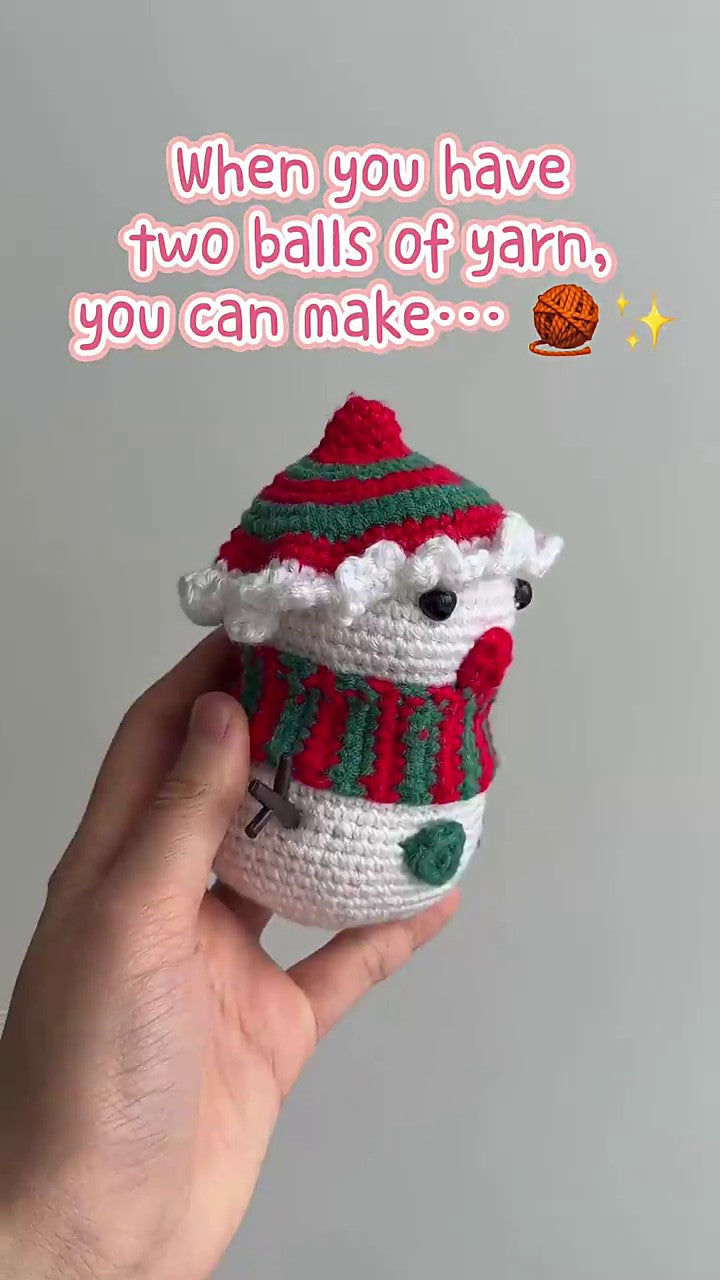
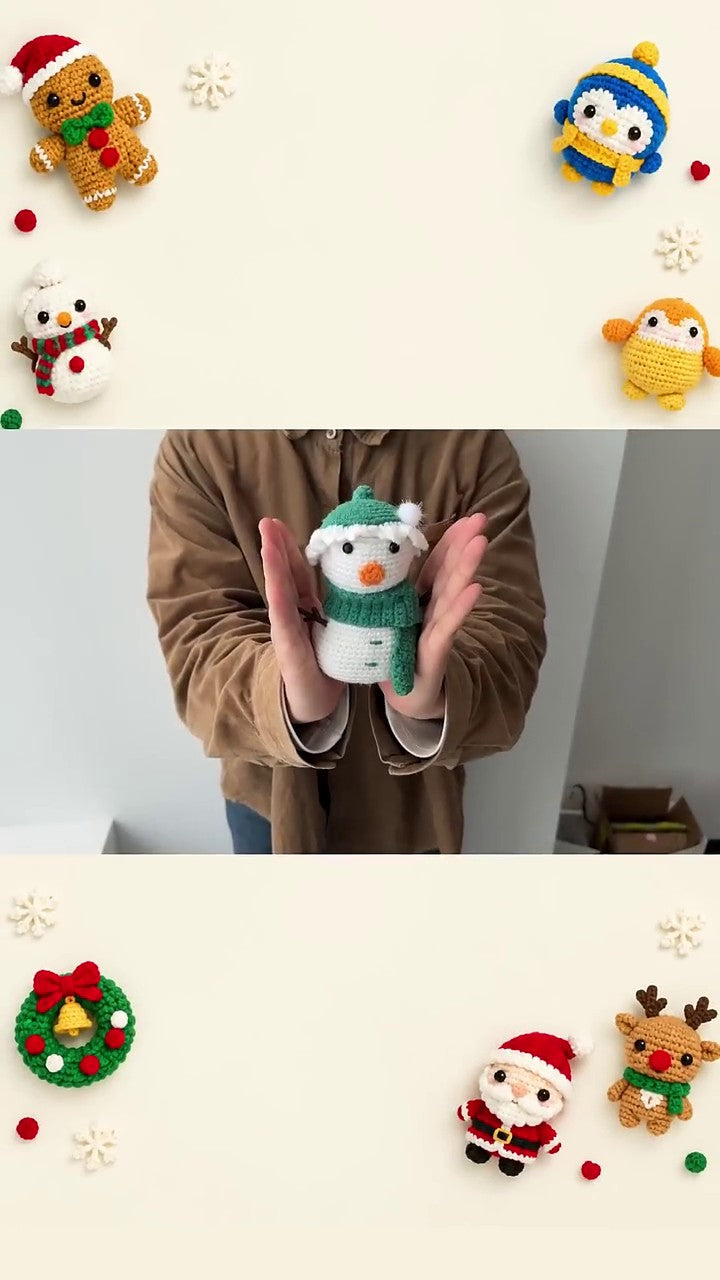
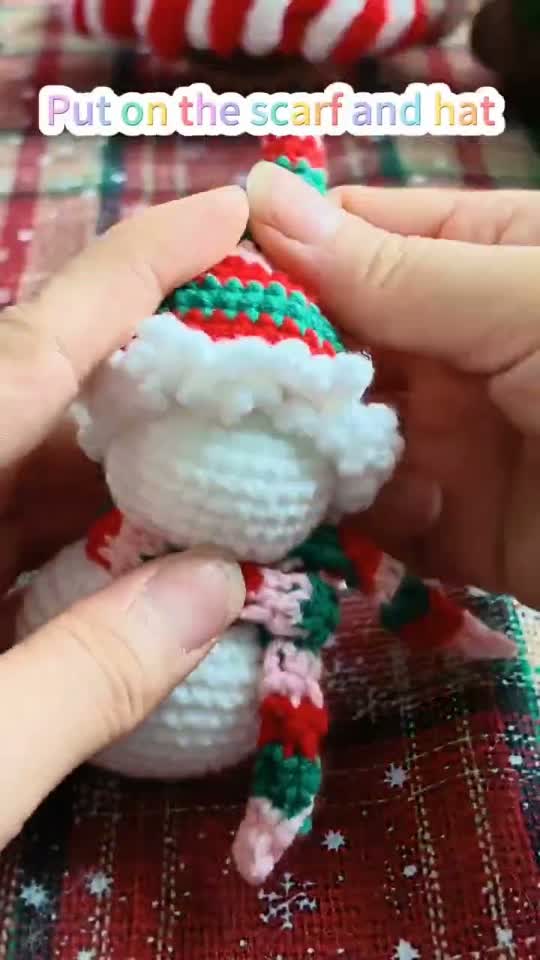
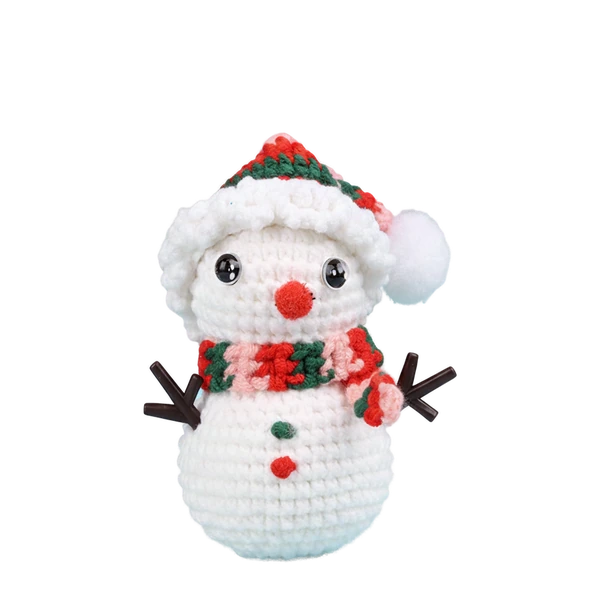
- Scarves for small toys, such as the striped scarves on a crochet snowman, are often short strips of single crochet.
- Amigurumi, the small stuffed crochet characters, are worked in single crochet in rounds. The tight stitches keep stuffing from showing through.

The Striped Hat Snowman Crochet DIY Kit makes a snowman about 10 cm tall and includes the yarn, a 2.5 mm hook, stuffing, eyes, pompoms, tree-branch arms, a yarn needle and stitch markers, with illustrated instructions in English and an English video tutorial opened with a QR code in the kit. Practice a few rows of single crochet first, then use the kit to try working in rounds. For a flat project to practice on, follow your first practice square.
A short practice plan
- Day 1. Chain 11 and work three rows of 10 single crochet. Count each row.
- Day 2. Make a strip of 10 rows with the same count. Check that both sides stay straight.
- Day 3. Try a wider strip, such as 20 stitches, for a coaster or a short bookmark.
Questions about single crochet
Is single crochet the same as UK double crochet?
Yes. The stitch is made the same way. US patterns call it single crochet (sc) and UK patterns call it double crochet (dc).
Does the turning chain count as a stitch in single crochet?
No. Chain 1, turn, and work the first single crochet into the last stitch of the row below.
Why does my single crochet piece get wider or narrower?
The count changes at the ends of the rows. Count each row and place a marker in the first stitch so you do not skip or add a stitch at the edges.
What should I learn after single crochet?
Half double crochet and double crochet use the same moves with an extra yarn over, so they make taller stitches. Learn them once your single crochet rows stay the same width.
Once your single crochet looks even, learn how to increase and decrease in single crochet.